
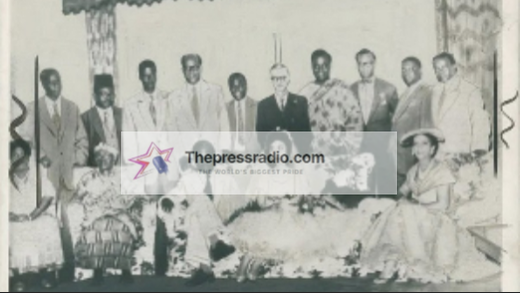
A rare historical photograph of Ghana’s first President, Osagyefo Dr Kwame Nkrumah, and his Egyptian wife, Fathia Halim Rizk, has resurfaced, offering a glimpse into one of the most notable marriages in Ghana’s political history.
The photograph captures the couple around the period of their wedding and has attracted renewed interest because of Nkrumah’s significant place in Ghana’s history and the unusual circumstances surrounding his marriage to Fathia.
Nkrumah married Fathia on December 30, 1957, less than a year after Ghana gained independence from British colonial rule. The marriage took place at Christiansborg Castle in Accra during a private civil ceremony.
Fathia, who was Egyptian and of Coptic Christian background, became Ghana’s First Lady following the marriage. Her union with Nkrumah was significant not only because of Nkrumah’s political position but also because it brought together two people from different cultural and national backgrounds at a pivotal period in Ghana’s history.
Historical accounts indicate that the circumstances surrounding their meeting and marriage were unusual. Fathia was living in Cairo before she travelled to Ghana, and reports have stated that she and Nkrumah had not met personally before her arrival in the country.
Their marriage subsequently became a subject of considerable public interest, particularly because Nkrumah was one of Africa’s most prominent political figures and an influential advocate of Pan-Africanism.
The couple went on to have three children: Gamal, Samia and Sekou Nkrumah. Fathia remained associated with Ghana’s presidency during Nkrumah’s years in office and continued to be remembered as an important figure in the country’s political history.
Nkrumah became Ghana’s first Prime Minister in 1957 and later served as the country’s first President after Ghana became a republic in 1960. He played a major role in the country’s independence movement and became an influential voice for African unity and liberation.
His marriage to Fathia therefore occurred during a particularly important period, when Ghana was emerging as an independent state and Nkrumah was increasingly becoming a prominent figure on the African and international political stage.
Nkrumah’s government was overthrown in a military coup in February 1966 while he was on a state visit to Asia. Following his removal from office, Fathia and the family eventually left Ghana.
Despite the political changes that followed, the story of Nkrumah and Fathia’s marriage has remained part of Ghana’s historical narrative.
The resurfaced photograph provides another visual record of the couple and the period in which their marriage took place. For many Ghanaians and historians, such photographs offer a valuable connection to the country’s early years of independence.
Beyond the image itself, the story of Nkrumah and Fathia reflects an important chapter in Ghana’s post-independence history, combining politics, culture and family life during one of the most transformative periods in the country’s development.
The rare photograph has consequently renewed interest in the couple and their place in Ghana’s history, particularly among those interested in the life and legacy of Ghana’s first President.
Kwame Nkrumah’s wedding pic.twitter.com/H7j6Vf2OCi
— HIGHLIFE lives ON (@GyapKay) August 21, 2026
Source: Thepressradio.com