

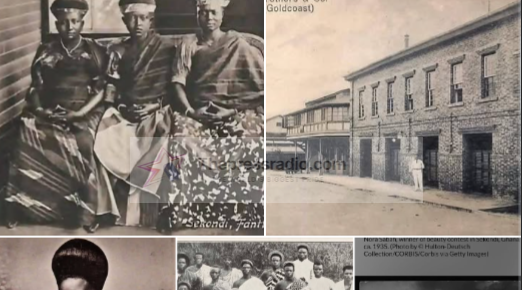
Sekondi and Takoradi, two historic coastal towns in Ghana’s Western Region, have grown from separate settlements into one of the country’s most recognised urban centres, popularly known as the Sekondi-Takoradi Twin City.
Although the two towns are now commonly referred to by a single name, each has its own history, cultural identity and contribution to the development of the region.
Sekondi is one of the older settlements along Ghana’s coast, with a history linked to traditional communities, fishing and early European trading activities. Its strategic coastal location made it an important centre for commerce and administration during the colonial era.
Historical records indicate that European powers established trading posts and forts in the area as competition for trade along the Gold Coast intensified. Fort Orange in Sekondi is among the historical landmarks associated with the town’s colonial past.
Takoradi, meanwhile, developed into a major commercial centre following the establishment of its harbour. The construction and development of the port attracted businesses, workers and traders, strengthening the town’s importance as a centre for maritime transport and economic activity.
The port became a major turning point in Takoradi’s development, helping to expand trade and supporting the movement of goods between Ghana and international markets.
As economic activities increased in both settlements, their populations and built-up areas expanded. The growing links between Sekondi and Takoradi gradually strengthened their shared identity, eventually leading to their recognition as one metropolitan area.
The Sekondi-Takoradi Metropolitan Assembly traces its administrative history to the establishment of the Sekondi Town Council in 1903. Takoradi was subsequently brought under the council’s administration, and the combined area was elevated to city status in June 1962.
The metropolitan area later underwent further administrative changes, with the name Sekondi-Takoradi Metropolitan Assembly adopted in 2008.
Today, Sekondi-Takoradi is the capital of Ghana’s Western Region and is widely regarded as one of the country’s major urban centres. Its coastal location, transport connections, port facilities and commercial activities have contributed to its continued importance.
The discovery of oil offshore in the Western Region in 2007 also helped stimulate economic activity in the wider area. The growth of businesses providing services to the oil and gas industry, alongside investment in infrastructure and hospitality, further strengthened the city’s economic profile.
Despite their shared metropolitan identity, Sekondi and Takoradi retain distinct historical and cultural associations. Sekondi is closely connected to the region’s traditional communities and administrative history, while Takoradi is particularly associated with its harbour and commercial development.
Their combined story illustrates how trade, transport infrastructure, administration and economic growth can transform neighbouring settlements into a major urban centre.
From their beginnings as separate coastal communities to their present-day status as Ghana’s famous Twin City, Sekondi and Takoradi remain an important part of the history, economy and cultural heritage of the Western Region.
Check out the post below:
Source: Thepressradio.com


