Doctors at Kumasi Hospital in the Ashanti Region have reportedly removed an unusually large bladder stone weighing 880 grams from a 49-year-old man who endured urinary difficulties and discomfort for nearly three decades.
The case has attracted attention because of the stone’s remarkable size and the length of time the patient reportedly lived with the condition. The operation was carried out by a medical team at the facility, which described the case as an unusual occurrence.
The patient, identified only as Akoto, reportedly experienced persistent pain and difficulty passing urine over many years. The condition affected his daily life and well-being before he sought treatment that eventually led to the removal of the stone.
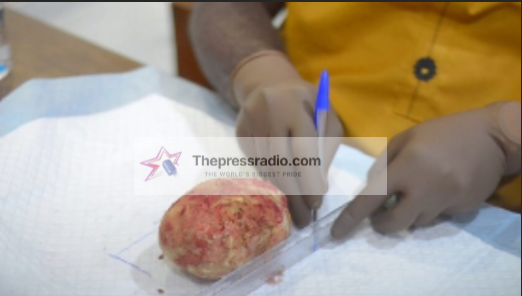
Dr Samuel Koranteng Asante, Chief Executive Officer of Kumasi Hospital, said the stone weighed approximately 980 grams when first removed but weighed 880 grams after being dried for more than 24 hours.
The stone was reportedly oval-shaped, measuring about 11.8 centimetres in length, 9.5 centimetres in breadth and nearly eight centimetres in width. Its size made the operation an exceptional case for the medical team.
Dr Asante indicated that a review of available medical literature had not revealed a comparable documented case in Africa. However, the claim that it is among the continent’s largest bladder stones would require independent verification before it could be regarded as an established record.
Bladder stones form when minerals in urine crystallise and harden inside the bladder. They can develop when the bladder does not empty completely, allowing urine to remain and minerals to accumulate.
Possible contributing factors include urinary obstruction, an enlarged prostate, nerve-related bladder problems and other conditions that interfere with normal urine flow. In this case, reports indicated that doctors identified a narrowing in the ureter, the tube that carries urine from the kidney to the bladder. The exact contribution of that finding to the formation of the stone was not independently established.
Symptoms of bladder stones can include pain in the lower abdomen, discomfort when urinating, frequent urination, interrupted urine flow and blood in the urine. Some people may experience few symptoms initially, making medical assessment important when urinary problems persist.
Treatment depends on the size of the stone and the patient’s condition. While some smaller stones may pass naturally, larger stones often require a medical procedure or surgery to remove them and address any underlying cause.
The case has also highlighted the importance of seeking medical attention rather than living with prolonged urinary difficulties. Persistent pain, an inability to urinate or worsening urinary symptoms should be assessed promptly by a healthcare professional.
Dr Asante reportedly encouraged people to drink adequate water and seek early treatment for urinary problems. Adequate hydration can help dilute urine, although it cannot by itself treat a large bladder stone or resolve an underlying obstruction.
The successful removal of the stone has brought attention to the challenges associated with untreated urinary conditions and the role of medical intervention in improving patients’ quality of life.
Source: Thepressradio.com