

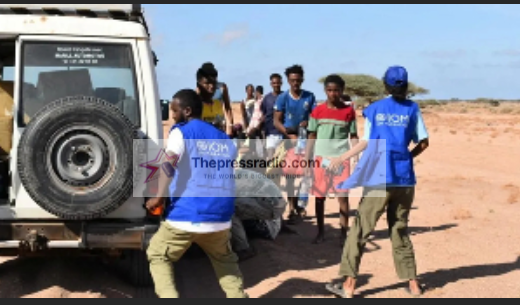
At least 139 migrants, including 15 children, have died after a boat carrying hundreds of people capsized off the coast of Djibouti while travelling along a migration route towards Yemen, according to the United Nations’ International Organization for Migration (IOM).
The tragedy occurred during the night of October 8–9, 2026, near Guhere, north of the port town of Obock. The boat was reportedly carrying approximately 305 people, many of whom were believed to be Ethiopian migrants hoping to reach Gulf countries in search of better economic opportunities.
According to the IOM, around 82 people survived the incident, while at least 84 others were reported missing. Search and rescue efforts were under way as authorities worked to establish the full circumstances surrounding the disaster.
The incident highlights the continuing dangers faced by migrants using irregular sea routes across the Horn of Africa and the Red Sea in attempts to reach destinations in the Middle East.
Djibouti lies along a major migration corridor used by people travelling from Ethiopia and other parts of East Africa towards Yemen. Despite the dangers associated with the journey, many migrants continue to take the route in the hope of finding employment and improving their living conditions.
The crossing can expose travellers to overcrowded boats, dangerous sea conditions and journeys organised by smugglers. Migrants may also face exploitation and other risks along the way.
The IOM said its teams were working with local authorities to provide emergency assistance to survivors. Search and rescue operations were also continuing as efforts were made to account for those who remained missing.
The latest disaster adds to a series of deadly incidents involving migrants attempting to cross the waters between the Horn of Africa and the Arabian Peninsula. The route remains active despite repeated warnings about the risks involved.
Children and other vulnerable people are particularly exposed to danger during these journeys, especially when boats are overcrowded and passengers have limited access to safety equipment or emergency assistance.
The repeated loss of life along migration routes has prompted humanitarian organisations to call for stronger protection measures, better access to safe migration pathways and greater efforts to address the circumstances that drive people to leave their home countries.
For many migrants, economic hardship, unemployment and the hope of finding better opportunities abroad remain major factors behind the decision to undertake dangerous journeys.
The full circumstances of the capsizing, including the cause of the incident and the final number of victims, remained subject to confirmation as rescue and identification efforts continued.
Source: Thepressradio.com