
Uganda has buried King Oyo Nyimba Kabamba Iguru Rukidi IV of the Tooro Kingdom following a period of mourning that was overshadowed by a dispute over who should succeed the late monarch.
King Oyo, who became ruler of Tooro at the age of three in 1995, died on August 27, 2026, at the age of 34 while receiving medical treatment in the United States. He was laid to rest at the Karambi Royal Tombs in Fort Portal on September 12.
His death brought renewed attention to the unusual circumstances surrounding the succession of the Tooro throne. Although Oyo was never publicly known to have married or had children, officials announced after his death that he had left behind a son who was expected to be considered as an heir.
The claim has, however, been disputed by members of the Babiito royal clan, which plays a central role in determining succession within the Tooro Kingdom.
A committee of royal clan members selected Prince Edward Rukidi Kijanangoma, a cousin of the late king, as the person to succeed Oyo. Kijanangoma is a news anchor and editor at Uganda Broadcasting Corporation.
The decision reportedly faced opposition from Oyo’s mother, Queen Mother Best Kemigisa, and his sister, Princess Ruth Komuntale. They maintained that the late king’s wishes pointed to a son as his successor.
The dispute became serious enough to draw the attention of the Ugandan government, with talks held between members of the royal family and the clan in an effort to resolve the disagreement before the burial.
The succession issue was particularly significant because traditional rituals surrounding the burial required a successor to be identified. According to reports, Kijanangoma formally assumed the role during the burial ceremony.
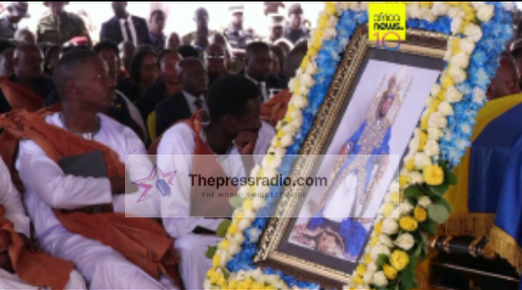
Despite the disagreement, thousands of mourners gathered in Fort Portal to pay their final respects to King Oyo. His funeral attracted members of the royal family, traditional leaders, government representatives and residents of the Tooro region.
King Oyo’s reign was notable because he became one of the world’s youngest reigning monarchs after ascending the throne as a child. He was initially guided by regents before eventually taking on greater responsibilities as an adult.
Although Uganda is a constitutional republic and traditional kings do not exercise formal political power, the country’s historic kingdoms continue to hold considerable cultural and social importance within their communities. The Tooro Kingdom remains an important institution for people in western Uganda.
During his reign, King Oyo was involved in a number of social and environmental initiatives. He promoted climate conservation, youth development, health awareness and efforts to improve the welfare of people within the kingdom.
His death therefore marked the end of a remarkable reign that began in childhood and continued for more than three decades.
With the king now buried, attention is expected to remain focused on the succession process and the question of who will ultimately be recognised as the legitimate successor to the Tooro throne.
The dispute has highlighted the importance of traditional customs and royal lineage in determining leadership within Uganda’s surviving kingdoms, while also raising questions about how competing claims should be resolved within established cultural institutions.
Source: Thepressradio.com