
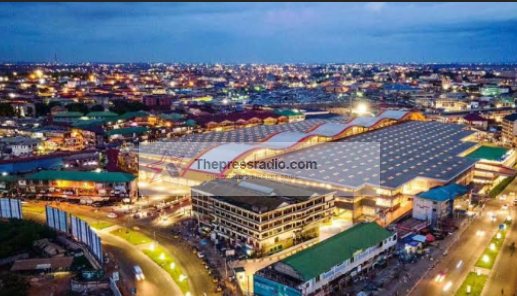
Work on the second phase of the Kumasi Central Market redevelopment project, popularly known as Kejetia Phase II, is expected to resume in October 2026 after years of delays.
Kumasi Metropolitan Chief Executive Richard Ofori-Agyemang Boadi disclosed that arrangements had been made to secure the resources required for contractors to return to the project site.
The announcement follows renewed engagements between the Kumasi Metropolitan Assembly (KMA), the Ministry of Finance, project contractors, consultants and other stakeholders over the stalled development.
According to the Kumasi Mayor, discussions with the relevant parties have provided renewed confidence that construction can restart in October.
The Phase II project has remained incomplete for several years, creating pressure on available trading space and raising concerns among traders and other stakeholders in Kumasi.
The redevelopment is expected to significantly expand the existing Kejetia complex and provide thousands of additional spaces for traders.
The project includes more than 3,760 counter shops, over 6,000 lockable shops and a transport terminal capable of accommodating about 600 vehicles.
The development is also expected to include other supporting facilities intended to improve the organisation of commercial activities within the market.
The contract for the project, valued at approximately €248 million, was signed in December 2018, with an initial completion period of 48 months.
However, the project has faced delays, with funding challenges identified as one of the major factors affecting its progress.
Project consultant Tony Yeboah of Avangarde Design Services said the project had reached about 68 per cent overall completion. Procurement was reported to be 84 per cent complete, while engineering works stood at 99 per cent. Physical construction, however, was reported at about 49 per cent.
About €171 million has reportedly been paid towards the project since its commencement.
The original financing arrangement was partly based on using revenue generated from completed sections of the market to support subsequent phases. The Kumasi Metropolitan Assembly has reportedly generated about GH¢89 million from Phase One since the facility was commissioned in 2018.
Authorities have indicated that additional funding arrangements are now being pursued to enable work on Phase II to continue.
The planned resumption is expected to provide relief to traders and help address pressure on trading spaces within Kumasi’s central business district once the project is completed.
The Kumasi Mayor has also warned traders to be cautious about individuals claiming to have the authority to allocate shops at the unfinished facility.
Traders have been urged not to make payments to individuals or groups promising to secure shops unless such payments have been officially authorised by the appropriate authorities.
The warning follows concerns that some people could attempt to take advantage of expectations surrounding the project’s planned restart by collecting money from prospective shop occupants.
The government and the KMA have reaffirmed their intention to complete the redevelopment, with Phase II expected to add significant commercial and transport infrastructure to the existing Kejetia complex.
For traders who have waited for years for the expansion to be completed, the expected return of construction activities in October could mark another stage in efforts to bring the long-delayed project to completion.
Source: Thepressradio.com