

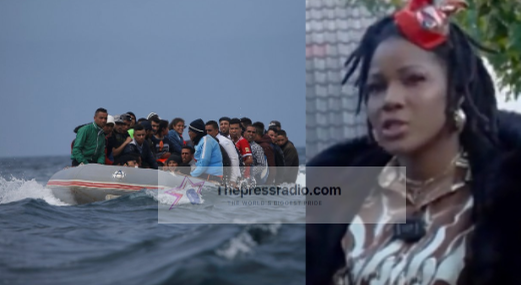
A Ghanaian woman living in Italy has recounted the harrowing experience she went through while attempting to travel from Libya to Europe by sea, revealing that only about 70 of the 120 people who embarked on the journey reportedly survived.
The woman shared her experience while recounting the dangers associated with irregular migration routes across the Mediterranean. Her story offers a sobering account of the risks migrants can face when attempting to reach Europe in search of better opportunities.
According to the account reported by GhanaWeb, the group began its journey from Libya with about 120 people on board a boat bound for Italy. However, the journey reportedly ended in tragedy, with only around 70 people making it through alive.
Her experience highlights the extreme dangers associated with crossing the Mediterranean on unsafe and overcrowded vessels. Migrants undertaking such journeys can spend long periods at sea, often under difficult conditions, with limited access to adequate food, water and safety equipment.
The Ghanaian migrant, who eventually made it to Italy, reportedly shared her experience as a warning to others who may be considering similar routes. Her account demonstrates that the desire to reach Europe can expose migrants to serious risks even before they arrive at their intended destination.
The route from Libya to Italy has for years been regarded as one of the most dangerous migration corridors in the Mediterranean. International organisations have repeatedly documented deaths and disappearances involving migrants attempting to cross the sea from North Africa to Europe.
The United Nations High Commissioner for Refugees has previously reported significant loss of life among people attempting the journey from Libya. In 2021 alone, more than 1,100 refugees and migrants were reported dead or missing at sea after departing from Libya.
The dangers are not limited to the sea crossing. Migrants travelling through Libya can also face difficult conditions before reaching the coast. Reports from international organisations and humanitarian groups have documented concerns about the treatment and vulnerability of migrants in the country.
For many people, the decision to undertake the journey is driven by hopes of finding better economic opportunities and building a more secure future. However, the Ghanaian woman’s experience illustrates the enormous human cost that can accompany such attempts.
Her account also adds to the growing number of personal stories highlighting the risks involved in irregular migration. Rather than being a straightforward journey to a better life, the route can expose travellers to life-threatening circumstances at multiple stages.
The reported survival of about 70 people from a group of 120 underscores the seriousness of the dangers faced by those aboard the vessel. The experience serves as a reminder that the Mediterranean crossing can have devastating consequences for migrants and their families.
The Ghanaian woman’s eventual arrival in Italy means she survived a journey that many others in her group reportedly did not. Her decision to speak about the experience could help draw attention to the realities faced by people who attempt dangerous migration routes.
Her story also reinforces calls for greater awareness of the risks associated with irregular migration and for safer, legal pathways for people seeking opportunities abroad.
For prospective migrants, the account provides a stark reminder that the journey from Libya to Europe can be extremely dangerous, with the possibility of loss of life before reaching the destination.
The experience of the Ghanaian woman therefore stands not only as a personal survival story but also as a warning about the dangers that can accompany desperate attempts to reach Europe by sea.
@toffiqomar This video is shared for news, awareness, and storytelling purposes. It highlights a difficult journey and aims to inform viewers about the challenges faced by migrants. #GhanaNews #NewsUpdate #GhanaianStories #CurrentEvents #TrueStory ♬ original sound – Toffiq Omar
Source: Thepressradio.com