
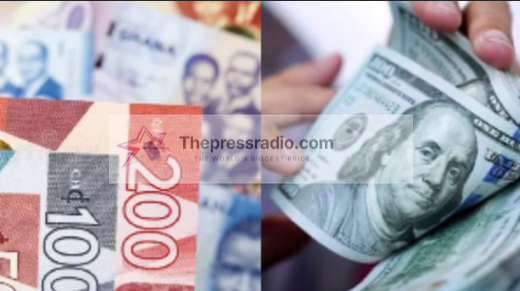
The Ghanaian cedi has come under renewed pressure against the United States dollar as demand for foreign exchange increases, particularly from energy importers and businesses preparing for the peak trading season.
Market data cited in the report indicate that the cedi depreciated by 1.86 percent against the US dollar in July 2026, reversing part of the 3.30 percent appreciation recorded in June.
The July decline represented the currency’s second monthly depreciation since May and reflected renewed pressure in Ghana’s foreign exchange market after a period of relative stability.
The cedi’s performance in June had been supported by significant foreign exchange interventions from the Bank of Ghana (BoG), which supplied approximately US$2.01 billion to the market through its intervention programmes.
However, pressure returned in July as demand for dollars increased. One of the major sources of demand has been the energy sector, where higher international crude oil prices have increased the amount of foreign exchange required to finance petroleum and other energy-related imports.
The pressure reportedly continued into August, with the cedi recording week-to-date and month-to-date losses of 0.52 percent and 1.66 percent respectively. On a year-to-date basis, the currency had depreciated by 8.06 percent against the US dollar, according to the market figures cited in the report.
Another factor contributing to the increased demand for dollars is the seasonal buildup towards the Christmas shopping period. Businesses typically increase their inventories ahead of the festive season, leading to greater demand for imported goods and, consequently, foreign currency to finance those imports.
The Bank of Ghana has acknowledged that seasonal demand could place temporary pressure on the cedi. However, the central bank has maintained that the recent movements do not necessarily represent a fundamental change in the medium-term outlook for the currency.
The BoG has indicated that foreign exchange interventions and remittance inflows should help moderate pressure on the cedi and support orderly conditions in the foreign exchange market.
As part of efforts to strengthen dollar liquidity, the central bank was expected to supply about US$500 million to the market in September through its foreign exchange intermediation programme.
The Ghana Gold Board (GoldBod) was also expected to provide an additional US$1.4 billion in foreign exchange receipts during the month.
According to the reported plan, US$700 million of the GoldBod receipts would be made available to commercial banks through spot sales and funded forward arrangements, while another US$700 million would be channelled to the Bank of Ghana for reserve accumulation under the Ghana Accelerated National Reserve Accumulation Policy (GANRAP).
Together, the planned flows could provide as much as US$1.9 billion in additional foreign exchange support during September.
The Bank of Ghana has also reiterated its intention to maintain a flexible exchange-rate regime, allowing market forces to determine the direction of the cedi while intervening when necessary to address excessive or disorderly volatility.
With businesses entering a period of traditionally stronger import demand, developments in dollar supply, energy prices and seasonal foreign exchange requirements are expected to remain important factors influencing the cedi’s performance.
Source: Thepressradio.com