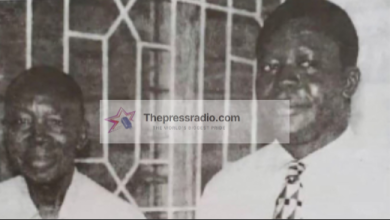

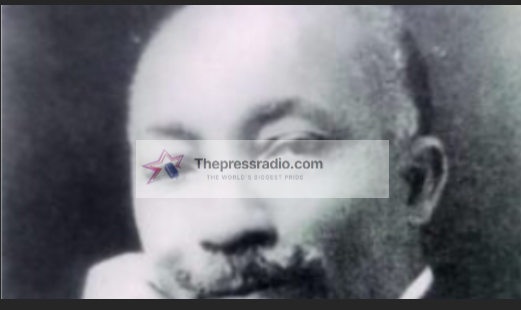
Archibald Casely-Hayford, popularly known as Archie Casely-Hayford, was a Ghanaian lawyer and politician remembered for defending Dr Kwame Nkrumah and other Convention People’s Party (CPP) leaders during the Gold Coast’s struggle for self-government.
His role as defence counsel for Nkrumah and other CPP activists ahead of the 1951 elections earned him the description “Defender of the Verandah Boys,” referring to the grassroots supporters who helped drive the party’s political mobilisation.
Casely-Hayford was born in 1898 in Axim, in the then Gold Coast. He came from a prominent family associated with education, law and nationalist politics. His father, Joseph Ephraim Casely Hayford, was a respected lawyer, writer and advocate of African nationalism who contributed to political debates during the colonial era.
Archie received his early education at Mfantsipim School in Cape Coast before travelling to Britain for further studies at Dulwich College in London and Clare College, University of Cambridge, where he studied law and economics. He returned to the Gold Coast and began practising law in 1921.
His legal career eventually intersected with the growing nationalist movement led by Nkrumah. The CPP was campaigning for immediate self-government, drawing support from workers, young people and ordinary citizens who wanted greater political representation and an end to colonial rule.
During this period, Nkrumah and several CPP activists faced legal challenges arising from their political activities. Casely-Hayford represented the party’s leaders, helping them navigate the legal system at a time when nationalist agitation was intensifying.
His work demonstrated the important role lawyers played in the independence struggle, not only by representing political leaders but also by helping defend the activities of a movement seeking constitutional and political change.
Following the CPP’s electoral success in 1951, Casely-Hayford entered government under Nkrumah. He was appointed Minister of Agriculture and Natural Resources and later served as Minister of Communications. In 1954, he became Minister for the Interior.
His movement from legal practice into government reflected the broader transition taking place in the Gold Coast, as nationalist leaders and their associates assumed greater responsibility for managing public affairs and preparing the territory for independence.
Casely-Hayford was also among the prominent figures who stood alongside Nkrumah during Ghana’s independence celebrations on March 6, 1957. His involvement in the nationalist movement placed him among the political figures associated with the country’s transition from colonial rule to independence.
He died on August 20, 1977. His contribution remains part of Ghana’s political history, particularly the story of how legal professionals and grassroots activists supported the campaign for self-government.
Casely-Hayford is remembered not only for his ministerial positions but also for his defence of Nkrumah and the CPP activists known as the Verandah Boys, whose mobilisation helped shape the country’s independence movement.
Source: Thepressradio.com