TraffiTech-GH Deal: Frank Kwame Osei and Business Partners Under Spotlight Over GH¢77.73m Contract


Questions surrounding Ghana’s controversial automated traffic enforcement programme, TraffiTech-GH, have intensified following an investigation identifying businessman Frank Kwame Osei and his business partners as key figures behind the arrangement.
The investigation, published by The Herald and reported by GhanaWeb, examines the ownership structure of the private company implementing the programme, the financial terms of its agreement with the government and alleged connections involving influential political figures.
At the centre of the report is Frank Kwame Osei, Chairman of Nationwide Group Ghana, who is identified as a major shareholder in Nationwide Traffic Management and Enforcement Limited (NTMEL), the company responsible for implementing TraffiTech-GH.
According to the investigation, NTMEL is a Ghanaian-Swedish joint venture involving Osei and Swedish traffic technology company Sensys Gatso International B.V. The reported ownership structure gives Osei a 60 per cent stake, while the Swedish partner holds the remaining 40 per cent.
The arrangement has attracted attention because of the financial benefits associated with the automated enforcement system and the length of the agreement between the private company and the government.
The contract was reportedly signed in December 2022 under the administration of former President Nana Addo Dankwa Akufo-Addo. It covers an 11-year period, expected to run until December 2033, with an estimated project cost of GH¢77.73 million.
Details contained in the Ministry of Finance’s 2024 Public-Private Partnership report also identify NTMEL as the private partner and confirm the estimated project cost and contract duration.
One of the most contentious aspects of the arrangement is the reported revenue-sharing formula, under which the private operator receives 40 per cent of fines collected through the system, while the government retains 60 per cent.
The revenue-sharing arrangement has raised questions about whether the private company receives an appropriate share of the proceeds and whether the financial structure provides sufficient protection for the public interest.
Critics have also questioned whether a system introduced primarily to improve road safety should create significant financial incentives linked to the number of traffic offences detected and penalties imposed.
The investigation further examines Osei’s reported political and business relationships, alleging that he has cultivated connections with influential figures across both the New Patriotic Party (NPP) and the National Democratic Congress (NDC).
It also raises questions about his reported relationship with Finance Minister Dr Cassiel Ato Forson. However, the precise nature of the minister’s involvement in the TraffiTech-GH arrangement remains unclear, and the allegations should not be interpreted as proof of wrongdoing.
Another major issue raised concerns the possible use of existing state-funded surveillance infrastructure in the implementation of the programme.
The investigation questions whether facilities associated with the National Security Alpha Project, which reportedly form part of Ghana’s surveillance infrastructure, are being used to support the private operator’s activities.
If publicly funded infrastructure is being used, questions arise about the extent of the private company’s investment and whether the revenue-sharing arrangement adequately reflects the government’s contribution.
The report also raises concerns about transparency surrounding the agreement, including whether the contract received parliamentary approval, the legal requirements governing its implementation and the extent of the government’s financial obligations.
It has consequently called for greater disclosure of the original agreement, any subsequent amendments, the revenue-sharing provisions and the investments made by the participating companies.
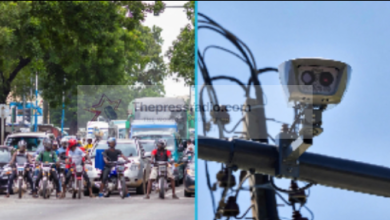
Meanwhile, the implementation of TraffiTech-GH has generated mixed reactions among motorists and other road users. Although the system is intended to improve compliance with traffic regulations and reduce road accidents, some motorists have expressed concerns about the condition of Ghana’s roads.
Issues such as potholes, inadequate road markings, malfunctioning traffic lights, poor street lighting and missing speed-limit signs have featured prominently in public discussions about the enforcement programme.
Critics argue that authorities must also address these infrastructure challenges to ensure that automated traffic enforcement is fair, effective and focused on preventing accidents.
TraffiTech-GH became operational on November 1, 2026, with the National Road Safety Authority maintaining that the system is intended to promote responsible driving and reduce road crashes rather than generate revenue.
The controversy surrounding the contract has therefore renewed calls for the government to provide comprehensive information about the agreement and explain how the arrangement protects taxpayers while ensuring that road safety remains the programme’s central objective.
Source: Thepressradio.com