
Ebola Outbreak in DR Congo Spreads to Sixth Province as Health Authorities Intensify Response

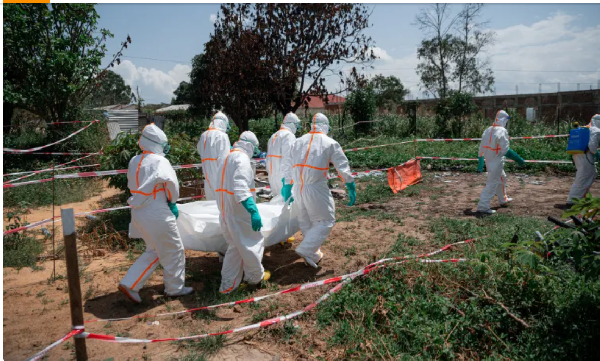
The Ebola outbreak in the Democratic Republic of Congo (DRC) has spread to a sixth province, raising fresh concerns about the ability of health authorities to contain one of the country’s fastest-growing Ebola outbreaks.
The newly affected province is Bas-Uele, where a death linked to Ebola was recorded after a motorcycle-taxi driver travelled there from neighbouring Haut-Uele province. The development was reported on August 13, 2026, after health authorities confirmed that the outbreak had reached the previously unaffected province.
The outbreak is being caused by the Bundibugyo strain of Ebola, a relatively rare strain for which there are currently no approved vaccines or treatments. Health authorities and international partners are nevertheless working to strengthen surveillance, testing and other measures aimed at slowing transmission.
The expansion into Bas-Uele has increased concerns because the province is located in a region affected by population movement, limited infrastructure and insecurity. These factors can make it more difficult for health workers to identify contacts, monitor people who may have been exposed and provide timely medical care.
According to the latest reports, the outbreak had recorded around 4,566 cases and 2,128 deaths by August 13. Most of the cases and deaths have been concentrated in Ituri province, where the outbreak began, while other affected provinces include North Kivu, South Kivu, Haut-Uele and Tshopo.
The rapid growth of the outbreak has alarmed health officials. The World Health Organization and Africa Centres for Disease Control and Prevention have warned that the situation requires an urgent and sustained response to prevent further spread.
One of the biggest challenges facing the response is the difficulty of tracing people who may have been exposed to the virus. Reports indicate that a significant proportion of recent cases have occurred outside known chains of transmission, making it harder for health authorities to identify where infections are occurring.
Health workers are also operating in difficult conditions. In some affected areas, insecurity, poor roads, limited communication networks and shortages of resources have restricted access to communities.
The situation has been further complicated by population movements linked to conflict and economic activity, including mining. Such movement can make it more difficult to track contacts and ensure that people who may have been exposed receive appropriate monitoring.
The outbreak has also placed pressure on healthcare workers, with reports of unpaid staff and other challenges affecting the response. Authorities and international partners have therefore stressed the importance of supporting frontline workers and ensuring that they have the resources needed to continue their work.
Despite the challenges, health authorities continue to strengthen surveillance and response activities. Clinical trials involving potential treatments and vaccines for the Bundibugyo strain are also underway, while researchers are examining whether existing Ebola vaccines could provide some level of protection.
The spread into Bas-Uele represents a significant development in the current outbreak and underlines the importance of early detection and rapid intervention.
Authorities are expected to intensify monitoring in the newly affected province while continuing containment efforts in the other affected areas.
The international health community is closely monitoring the situation, particularly because of the possibility that continued transmission could put neighbouring countries at greater risk.
For now, health officials are urging communities to cooperate with response teams and follow public-health guidance as efforts continue to bring the outbreak under control.
Source: Thepressradio.com


