

Ghana has reportedly avoided being included among countries expected to reimburse South Africa for costs associated with the repatriation of foreign nationals following a period of unrest and attacks targeting migrants.
According to a report , Ghana took a different approach by independently organising and financing the evacuation of its citizens from South Africa rather than relying on arrangements offered by the South African government.
The development has reportedly placed Ghana in a favourable position as South African authorities seek to recover expenses incurred in transporting and supporting migrants who returned to their respective countries.
South Africa reportedly spent a substantial amount of $18M on the repatriation exercise, covering expenses associated with transportation, temporary accommodation, food and other logistical requirements. The costs reportedly ran into millions of US dollars.
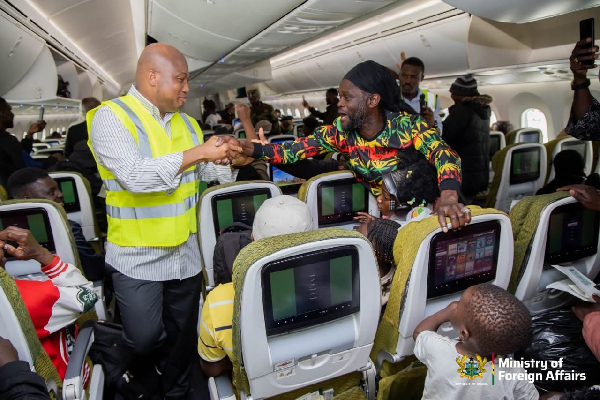
Ghana, however, chose to take responsibility for the return of its nationals. The Ghanaian government, with assistance from private-sector stakeholders, arranged flights to bring affected Ghanaians home.
More than 1,600 Ghanaian nationals were reportedly repatriated through a combination of chartered and commercial flights. The exercise was undertaken as concerns grew over the safety of some Ghanaian residents in South Africa.
The decision to independently finance the evacuation meant that Ghana did not have to depend on the repatriation arrangements provided by South African authorities. According to the report, South Africa had offered assistance, but Ghana opted to make its own arrangements.
The situation illustrates the financial and diplomatic considerations that can arise when governments organise the return of citizens during periods of instability.
For Ghana, taking responsibility for the evacuation allowed the government to directly manage the process and make arrangements specifically for its nationals. It also meant that the country was reportedly not among those being asked by South Africa to reimburse expenses associated with the latter’s repatriation programme.
South Africa reportedly sought reimbursement from a number of other countries whose nationals were repatriated under arrangements supported by the South African government. Countries mentioned in connection with the claims included Nigeria, Malawi, Ethiopia, Zimbabwe and Mozambique.
The issue comes against the backdrop of concerns over the treatment and safety of foreign nationals in South Africa. Ghanaian nationals were among African migrants affected by the unrest, prompting calls for measures to protect citizens and assist those who wanted to return home.
The Ghanaian government’s response involved coordinating the evacuation process and working with other stakeholders to facilitate the safe return of affected citizens.
The repatriation exercise also highlighted the importance of cooperation between governments when citizens face threats or difficult circumstances outside their home countries.
While the financial implications of such operations can be significant, governments may be required to make difficult decisions when the safety of their citizens becomes a concern.
Ghana’s decision to fund its own evacuation has consequently been viewed as a move that helped the country avoid additional financial obligations connected to South Africa’s repatriation programme.
The development further demonstrates how advance planning and direct government intervention can influence the financial and logistical outcomes of emergency repatriation exercises.

Source: Thepressradio.com


