

A forensic audit report into the controversial National Cathedral project has been completed and submitted to the Attorney-General for review, paving the way for possible further action over financial and procurement issues identified in earlier investigations.
The development follows an earlier audit conducted by Deloitte & Touche, which examined financial transactions and other aspects of the National Cathedral project. While that audit identified a number of concerns, questions remained over who was responsible for the issues identified and whether some of the transactions complied with the applicable laws and regulations.
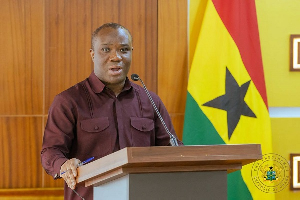
Government Communications Minister Felix Kwakye Ofosu confirmed that the forensic report had been completed and was now with the Attorney-General.
According to him, the forensic examination was commissioned to go beyond the findings of the initial audit by establishing responsibility for any irregularities and determining whether there was evidence of wrongdoing that could warrant further action.
The report is therefore expected to provide a more detailed examination of the transactions and activities associated with the project and could help authorities determine whether individuals or entities should be held accountable.
The Attorney-General is currently reviewing the findings. The next steps will depend on what the forensic investigation has established and whether the evidence supports administrative, financial or legal action.
Kwakye Ofosu indicated that he had not personally reviewed the contents of the forensic report and therefore would not comment on specific findings before the Attorney-General’s review is completed.
He explained that the appropriate authorities would have to assess the report and determine what action, if any, should be taken against persons who may have been implicated.
The development adds another chapter to the controversy surrounding the National Cathedral, one of Ghana’s most prominent and politically sensitive public projects.
The project has faced scrutiny over its financing, contractual arrangements, expenditure and the management of funds. Concerns raised by previous investigations have intensified calls for greater transparency and accountability in the use of public resources.
The earlier Deloitte audit reportedly identified concerns relating to consultancy fees, contractual arrangements, payments and other financial transactions connected to the project. The forensic audit was subsequently expected to provide a deeper examination of these issues and establish whether the irregularities identified constituted breaches of financial or procurement rules.
The submission of the forensic report to the Attorney-General now shifts attention to the legal assessment of its findings.
If the report establishes evidence of financial misconduct or other violations, the Attorney-General could consider appropriate legal measures against persons found to have acted improperly. However, any such action would depend on the evidence contained in the report and the applicable laws.
The National Cathedral project has attracted significant public attention because of the amount of money involved and its connection to successive discussions about the management of public finances.
The forensic audit is therefore being viewed as an important step towards determining the facts surrounding the project’s financial management.
For supporters of greater accountability, the report could provide clarity on questions that have remained unresolved following earlier investigations. For the government and relevant institutions, its findings could also provide a basis for determining how to address any outstanding financial or administrative issues.
The Attorney-General’s review will consequently be closely watched, particularly if the report identifies specific individuals, companies or transactions that require further investigation.
For now, however, officials have maintained that the report must first undergo the necessary review before any conclusions are drawn or further action announced.
The submission of the forensic audit represents a significant development in the long-running scrutiny of the National Cathedral project and could ultimately determine whether the financial concerns surrounding the initiative lead to further administrative or legal proceedings.
Source: Thepressradio.com