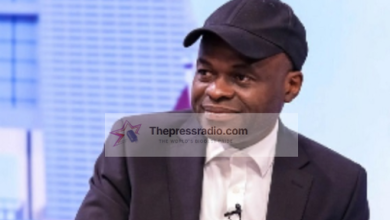


Her Honour Angela Attachie, a judge of the Adenta Circuit Court 1, has reportedly disclosed that threats from individuals, including people she associated with political figure Abronye, forced her to take additional security measures.
According to the report, the judge made the revelation while discussing the challenges and pressures that judicial officers can face in the course of their duties. She indicated that the nature of the threats she received became a serious concern for her personal safety, eventually leading her to secure the services of a bodyguard.
The disclosure has brought renewed attention to the security of judges and other judicial officers who are required to make decisions on sensitive matters that can sometimes generate strong reactions from members of the public.
Judges are expected to perform their duties independently and without fear or favour. However, Justice Attachie’s account suggests that personal threats can create another layer of difficulty for judicial officers as they carry out their responsibilities.
The judge reportedly referred to threats from people like Abronye while explaining why she had to take steps to protect herself. Her comments highlight the possible consequences of confrontations involving judicial officers and individuals who may strongly disagree with decisions made in court.
The judiciary plays a central role in upholding the rule of law, with judges entrusted with the responsibility of hearing cases, evaluating evidence and delivering decisions based on the law. Because of this responsibility, judicial officers can sometimes become the focus of criticism, particularly when cases attract significant public or political interest.
Justice Attachie’s decision to obtain a bodyguard demonstrates the level of concern that threats can create for a judicial officer. While public criticism of court decisions can form part of democratic discourse, threats against judges raise a different concern because they can potentially undermine the independence and security of the judiciary.
The revelation has therefore raised questions about whether adequate measures are being put in place to protect judicial officers who may become targets because of their professional responsibilities.
For judges to perform their duties effectively, they must be able to make decisions without fear of retaliation or intimidation. Any situation that causes a judge to fear for their personal safety could have wider implications for confidence in the justice system.
The report did not provide all the details surrounding the specific threats referenced by Justice Attachie. It also did not establish that Abronye personally made threats against the judge. Rather, the judge’s comments referred to threats from people she described in connection with individuals such as Abronye.
The distinction is important because allegations involving threats and intimidation require careful consideration and should not automatically be interpreted as proof of wrongdoing by a person who has merely been mentioned in connection with them.
Nevertheless, Justice Attachie’s account has brought the issue of judicial security into the spotlight. It also highlights the need for appropriate mechanisms to ensure that judges and other court officials can carry out their responsibilities in a safe environment.
The safety of judicial officers remains important to the broader functioning of the justice system. Ensuring that judges are protected from threats and intimidation can help preserve their ability to perform their duties independently and uphold the rule of law.
Justice Attachie’s revelation therefore serves as a reminder of the pressures that judicial officers can encounter beyond the courtroom and the importance of maintaining a secure environment for the administration of justice.
Adenta Circuit Court 1 Judge, Her Honour Angela Attachie, has cautioned lawyers against attacking judges over their rulings, urging them to use established legal procedures to address grievances.
She says such attacks threaten the rule of law.#Judiciary #RuleOfLaw #GhanaLaw… pic.twitter.com/S0m1kUp0w4
— CITI FM 97.3 (@Citi973) August 24, 2026
Source: Thepressradio.com