Nigerian Opposition Parties Raise Alarm Over N250 Million Charge for Single Campaign Billboard Ahead of 2027 Elections

Opposition political parties in Nigeria have accused the ruling All Progressives Congress (APC) of attempting to undermine political competition ahead of the 2027 general elections through what they describe as excessive charges for erecting campaign billboards.
The parties claim that the high fees being demanded for campaign advertising could make it difficult for opposition groups to communicate their messages to voters and compete fairly with the ruling party.
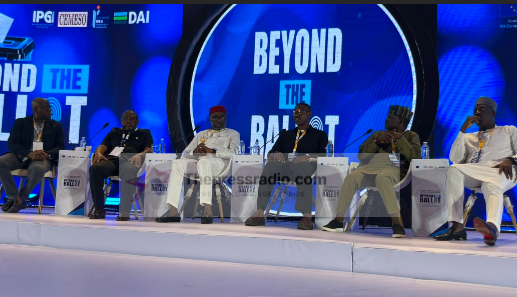
The concerns were raised on Thursday during a panel discussion at the National Summit on Artificial Intelligence (AI), Foreign Information Manipulation and Interference (FIMI), and Electoral Information Integrity held in Abuja.
Bolaji Abdullahi, National Publicity Secretary of the African Democratic Congress (ADC), disclosed that his party had reportedly been asked to pay N250 million to erect a single campaign billboard.
He described the demand as an attempt to interfere with the democratic process, arguing that such charges could restrict the ability of opposition parties to campaign effectively.
Araba Rufus, National Publicity Secretary of the Social Democratic Party (SDP), also disclosed that his party had encountered similar challenges, citing a billboard charge of N20 million in his state.
The opposition representatives argued that the alleged charges raised questions about the fairness of the political environment as parties prepare for the 2027 elections.
The discussion formed part of a panel titled “Political Parties Dialogue: Campaigning Without Deception”, which brought together representatives of political parties to examine ways of addressing negative campaigning, political propaganda and the growing threat of AI-generated disinformation.
The ruling APC had reportedly been invited to participate in the discussion but was absent.
Rufus criticised the party’s decision not to attend, suggesting that its absence raised questions about its willingness to engage in conversations concerning electoral integrity and responsible political communication.
Prince Chinedu, Director-General of the Inter-Party Advisory Council (IPAC), offered a different perspective on the persistence of negative campaigning in Nigeria.
He attributed the problem partly to the absence of clear political ideologies, programmes and well-defined policy positions among political parties.
However, Abdullahi disagreed with the suggestion that ideological differences were the main problem, insisting that Nigerian political parties had identifiable policy positions.
To support his argument, he compared the economic positions of the APC and ADC, particularly regarding fuel subsidy removal and petroleum pricing.
He explained that the APC supported the removal of fuel subsidies and market-driven petroleum prices as a way of addressing economic challenges, while the ADC had indicated its intention to restore the subsidy and ensure that fuel prices reflected the interests of ordinary Nigerians.
Abdullahi further accused the ruling party of encouraging negative political campaigning through what he described as a culture of impunity.
Osa Director, National Publicity Secretary of the National Democratic Congress (NDC), also criticised the alleged use of propaganda against opposition parties.
He said the NDC had instructed its supporters to avoid name-calling but maintained that the party would respond strongly when confronted with attacks and misinformation.
According to him, the party’s responses were based on facts, even when they appeared disproportionate to the accusations directed at it.
Rex Elanu, National Publicity Secretary of the African Action Congress (AAC), raised concerns about alleged recent attacks against the party’s presidential candidate, which he attributed to suspected APC thugs.
He questioned why individuals allegedly responsible for such incidents had not been held accountable.
Elanu also warned against the misuse of Nigeria’s Cybercrimes Act to criminalise defamation and recalled the AAC’s opposition to provisions of the Electoral Act, which he said had been imposed despite concerns raised by stakeholders.
Another major issue discussed during the summit was the discovery of AI-generated profiles on the Independent National Electoral Commission’s (INEC) portal.
Participants questioned why no arrests or prosecutions had been announced in connection with the incident, raising concerns about the security and credibility of Nigeria’s electoral information systems.
Abdullahi questioned why the APC appeared to be the only major political party that had not expressed concern about the discovery.
Meanwhile, Osa argued that artificial intelligence itself was not the problem but insisted that INEC should not rely on AI to conduct elections or collate results.
He called for the use of manual procedures and other independently verifiable methods to protect the credibility of election outcomes.
The participants also identified weak institutions and inadequate regulation of information platforms as factors contributing to the spread of electoral misinformation, political violence and negative campaigning.
Summing up the discussion, panel moderator Professor Okechukwu Ibeanu stressed the importance of educating citizens about their responsibility in protecting Nigeria’s democratic system.
He argued that the greater danger was not simply the existence of bad information but deliberate attempts to restrict access to the information voters need to make informed electoral decisions.
With the 2027 elections approaching, the opposition parties’ concerns have added to the growing debate about campaign financing, political competition, electoral transparency and the use of artificial intelligence in Nigeria’s democratic process.
Source: Thepressradio.com