
How Old Was Yaa Asantewaa When She Led the Asante Resistance Against the British in 1900?

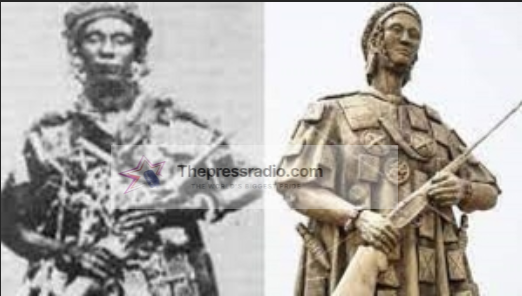
Nana Yaa Asantewaa, one of Ghana’s most celebrated historical figures, was approximately 60 years old when she led the Asante resistance against British colonial forces during the War of the Golden Stool in 1900, based on historical records that place her birth around 1840.
Yaa Asantewaa was the Queen Mother of Ejisu in the Asante Empire, in present-day Ghana. She became widely recognised for her courage and determination in defending Asante sovereignty at a time when British colonial authorities were seeking to strengthen their control over the kingdom.
Her leadership came during a period of growing tension between the Asante and the British. In 1900, British colonial governor Frederick Hodgson demanded access to the Golden Stool, a sacred symbol of Asante authority, unity and spiritual identity.
The demand provoked widespread anger among the Asante, as the Golden Stool represented far more than a traditional object. It embodied the soul and collective identity of the Asante people, making the British demand a direct challenge to their cultural and political independence.
At a meeting of Asante leaders, disagreements reportedly emerged over how to respond to British pressure. While some leaders were reluctant to engage in another military confrontation, Yaa Asantewaa emerged as a powerful voice calling for resistance.
She challenged the hesitation among the leaders and encouraged them to defend their kingdom and its sacred traditions. Her intervention helped rally support for the uprising, placing her at the centre of one of the most significant anti-colonial struggles in Ghana’s history.
The conflict became known as the War of the Golden Stool, also referred to as the Yaa Asantewaa War. It began in 1900 and involved Asante forces resisting British attempts to impose their authority over the kingdom.
Yaa Asantewaa’s role was particularly significant because women rarely occupied such prominent positions in the military leadership of colonial-era conflicts. Her involvement demonstrated her influence within Asante society and her willingness to confront a powerful colonial force in defence of her people.
Although the British eventually suppressed the resistance, Yaa Asantewaa’s name became synonymous with bravery, patriotism and the struggle for self-determination. She was captured and exiled to the Seychelles alongside other Asante leaders.
She died in exile in 1921, but her legacy has endured across generations. She remains an important symbol of Ghana’s resistance to colonial rule and the role women played in defending the country’s history, culture and political identity.
The exact year of Yaa Asantewaa’s birth is not consistently established across historical accounts. However, sources that place her birth around 1840 suggest that she was about 60 years old during the 1900 uprising. The estimate highlights that her leadership came at an advanced age, further reinforcing the significance of her contribution to the resistance.
More than a century later, Yaa Asantewaa continues to be remembered for standing against colonial demands and mobilising her people to defend the Golden Stool. Her story remains a powerful part of Ghana’s historical heritage and a reminder of the sacrifices made in the pursuit of sovereignty.
Source: Thepressradio.com