
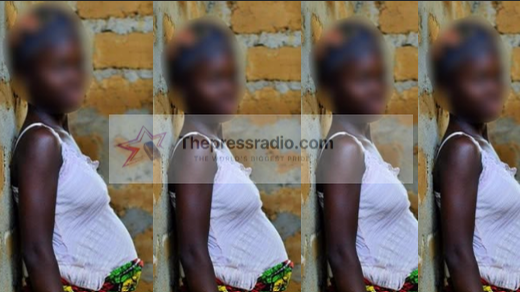
The Ghana Health Service (GHS) has released figures showing that 1,501 girls between the ages of 10 and 14 were recorded as pregnant at health facilities across Ghana between January and July 2026.
The figures form part of a wider total of 53,415 adolescent pregnancies recorded nationwide during the first seven months of the year, according to data from the GHS routine Health Information System.
The statistics were disclosed by Sharifa Mohammed, Programme Manager for Adolescent Health and Development at the Ghana Health Service, during a National Multisectoral Dialogue on the Reduction of Teenage Pregnancy held in Accra.
The figures have renewed attention on the challenges facing adolescent girls in Ghana, particularly children in the youngest age group covered by the data.
According to the GHS, adolescent pregnancies continue to be associated with several social and economic factors, including education, access to information and health services, gender and social norms, and poverty.
The data also indicate a strong connection between school attendance and adolescent pregnancy. Sharifa Mohammed said pregnancies were significantly higher among girls who were out of school compared with those who remained in school, highlighting the importance of keeping girls in education.
The scale of the figures also varies considerably across regions. The Savannah Region recorded an adolescent birth rate of 117.5 births per 1,000 adolescent girls, above the reported sub-Saharan African average of 104 births per 1,000.
Within the Savannah Region, the Bole District recorded 230 births per 1,000 girls aged 18 to 19.
The Upper East Region also recorded more than 2,400 adolescent pregnancies during the first five months of 2026, with approximately 520 cases reported in the Bongo District alone.
The GHS has been implementing measures aimed at addressing the health and social needs of adolescent girls. Since 2017, its “Safety Net” intervention has provided maternal and child health services, reproductive health education, psychosocial support, referrals and links to social protection programmes.
The programme also supports pregnant adolescents who are able to return to school through collaboration with the Ghana Education Service. Girls who cannot return to formal education may be linked to organisations and programmes that provide vocational and livelihood skills.
The Ghana Health Service said it had reached more than 310,000 young people with sexual and reproductive health information in 2026, while approximately 54,000 pregnant adolescents had received services during the year.
Clara Nyarkoah Anim, Programme Manager at MSI Reproductive Choices Ghana, said adolescent pregnancy was influenced by multiple interconnected factors and required coordinated interventions rather than a single solution.
She called for existing policies and programmes to be properly implemented, adequately resourced and subjected to accountability. She also emphasised the importance of involving young people in efforts to address the issue because they understand many of the challenges affecting their peers.
The 2022 Ghana Demographic and Health Survey previously found that 15.2 per cent of girls aged 15 to 19 had experienced pregnancy.
The latest figures underscore the continuing need for stronger support for adolescent girls, including access to education, appropriate health services, psychosocial support and child-protection measures.
Source: Thepressradio.com