

Ghana’s ambition to transform its lithium resources into a major driver of economic growth is facing renewed scrutiny, as delays surrounding the proposed Ewoyaa lithium mine raise questions about the country’s ability to secure long-term benefits from the emerging industry.
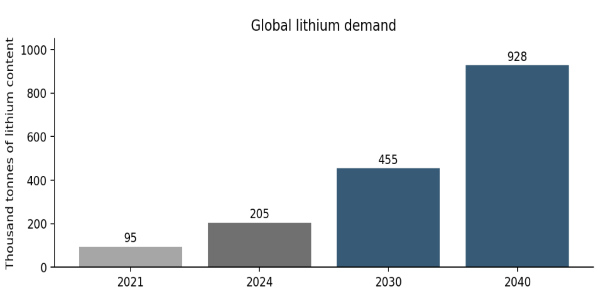
The Ewoyaa project, located in the Central Region, is expected to play a significant role in Ghana’s plans to participate in the global lithium market. Lithium is a key mineral used in rechargeable batteries for electric vehicles, mobile phones and energy storage systems, making it increasingly important as countries pursue cleaner energy technologies.
The project is being developed by Barari DV Ghana Limited, a subsidiary of Atlantic Lithium. It has attracted attention because of its potential to generate government revenue, create employment and support the development of industries linked to mineral processing and battery production.
However, concerns have emerged over delays, negotiations and the arrangements governing Ghana’s participation in the project. Critics argue that prolonged uncertainty could postpone potential economic benefits and weaken the country’s position in a rapidly developing global market.
A central issue is whether Ghana can move beyond extracting raw minerals and establish a stronger domestic value chain. Rather than exporting lithium-bearing material with limited processing, the country could seek opportunities to develop mineral processing, manufacturing and other supporting industries locally.
Such an approach could create skilled jobs, expand technical expertise and allow more of the economic value generated by the mineral to remain within Ghana. The development of related industries, however, would require substantial investment, reliable infrastructure, appropriate technology and clear long-term policies.
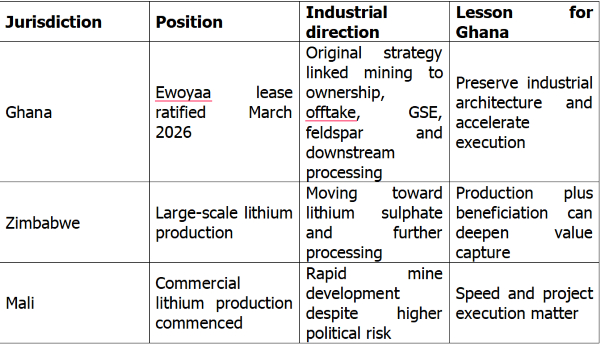
Questions about local ownership and participation have also featured in discussions surrounding the project. Proposals involving Ghanaian investment, representation in decision-making, access to mineral supplies and possible listing arrangements on the Ghana Stock Exchange have formed part of the broader debate about how the country should benefit from its natural resources.
The proposed change in Atlantic Lithium’s ownership has added another dimension to the discussion. In May 2026, the company entered an agreement for China’s Zhejiang Huayou Cobalt to acquire it in a transaction reported to be worth approximately US$210 million. The implications for Ghana’s lithium ambitions depend on the final outcome of the transaction and the terms governing the project.
For Ghana, the challenge is to ensure that any ownership changes or investment arrangements support national development priorities while maintaining the commercial viability of the mine.
The interests of communities around Ewoyaa also remain important. Mining development can affect land use, farming activities and local livelihoods, making transparent consultation, fair compensation and effective environmental oversight essential.
The project’s future therefore extends beyond the extraction of lithium. Its broader significance lies in whether Ghana can use the resource to strengthen its industrial base, develop local expertise and create opportunities that endure beyond the life of the mine.
Ghana’s lithium prospects remain an opportunity, but turning that potential into lasting economic gains will depend on timely implementation, sound governance, investment and clear commitments to local value addition.
Source: Thepressradio.com