
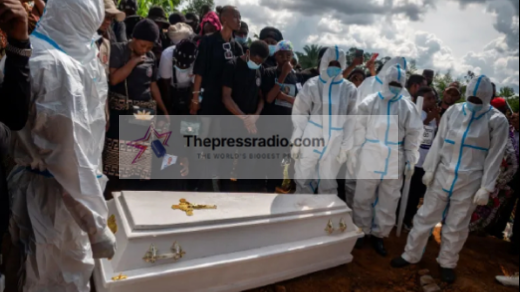
The death toll from an Ebola outbreak affecting parts of Central and East Africa has exceeded 5,300, with the Democratic Republic of the Congo (DR Congo) accounting for the overwhelming majority of reported fatalities, according to figures released by the Africa Centres for Disease Control and Prevention (Africa CDC).
Data cited in reports on November 2, 2026, indicated that the outbreak had claimed 5,376 lives across the affected countries, including 5,372 deaths in DR Congo. Kenya and Uganda each recorded two deaths, bringing the reported regional total to more than 5,300.
The outbreak has also resulted in approximately 10,444 reported infections across DR Congo, Kenya and Uganda, according to the figures. The scale of the fatalities has raised concerns among public health authorities as they continue efforts to contain the spread of the virus and strengthen surveillance in affected communities.
The outbreak is associated with the Bundibugyo strain of the Ebola virus, a relatively rare variant for which there is currently no approved vaccine or specific treatment. This presents additional challenges for health workers, who must rely on early detection, isolation, supportive medical care and infection-prevention measures to manage cases and limit transmission.
Uganda was among the countries affected by the outbreak, recording 20 cases before authorities declared the country Ebola-free in August 2026. However, Kenya subsequently reported nine infections in October, marking the country’s first recorded Ebola cases and highlighting the risk of cross-border transmission.
Health authorities have continued monitoring suspected infections and strengthening measures aimed at identifying cases early. In Nigeria, suspected cases mentioned in the reports tested negative, although a separate imported case was reported in Abuja.
The outbreak has also renewed attention on the need for vaccines and medical interventions capable of addressing different Ebola virus strains. Clinical trials have begun involving the Ervebo vaccine, which was developed for the more common Zaire strain of Ebola. However, the vaccine was not specifically developed for the Bundibugyo strain responsible for the current outbreak.
Ebola is a severe viral disease that can spread through direct contact with the blood or bodily fluids of an infected person, as well as contaminated materials. Symptoms can include fever, weakness, muscle pain, vomiting and diarrhoea, with severe cases potentially resulting in internal and external bleeding.
Public health authorities generally advise people to avoid contact with the bodily fluids of suspected or confirmed patients, practise good hygiene and seek medical attention if they develop symptoms after possible exposure. Early identification and isolation of infected individuals remain important in preventing further transmission.
The high number of deaths recorded in DR Congo underscores the continuing public health challenges facing the country, which has experienced repeated Ebola outbreaks over the years. Health officials across the region are expected to maintain surveillance, coordinate responses and strengthen public awareness as efforts to control the outbreak continue.
The reported figures reflect the Africa CDC data cited in reports on November 2, 2026. They may change as health authorities verify cases and update their records.
Source: Thepressradio.com