
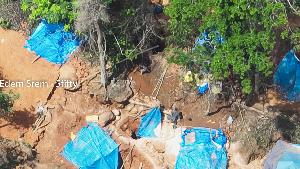
Atewa Forest Reserve is facing renewed danger after reports emerged that illegal miners have allegedly established a base within the protected forest zone.
The reported development has triggered concern among conservationists, community leaders and environmental campaigners who have repeatedly warned about growing illegal mining activities in forest reserves across Ghana.
Atewa Forest, located in the Eastern Region, is one of Ghana’s most important natural ecosystems. It is widely known for its rich biodiversity and as the source of major rivers that supply water to many towns and cities.
The presence of illegal miners inside the reserve is seen as a major threat to both wildlife and water resources. Mining activities in such areas often lead to deforestation, land degradation and contamination of rivers with harmful chemicals.
According to the report, the miners are believed to have moved into parts of the forest and created a working base from which they operate. This raises concerns that the illegal activity may be expanding despite previous government crackdowns on galamsey.
Illegal small-scale mining has remained a serious challenge in Ghana for years. Authorities have launched several operations to stop the practice, but miners often return to protected lands and water bodies after enforcement teams leave.
Environmental advocates say Atewa Forest deserves stronger protection because of its national importance. The forest supports rare plant species, animals and birdlife, making it one of the country’s valuable ecological treasures.
The reserve is also critical because it serves as a watershed for key rivers, meaning damage to the forest could affect clean water supply for millions of people.
Campaigners have long called for Atewa Forest to receive a higher conservation status to prevent mining and other destructive activities. Some have proposed turning the reserve into a national park.
Local residents near the forest are also worried about the long-term impact of illegal mining on farming lands, streams and community health. Polluted water and destroyed vegetation can seriously affect livelihoods in surrounding towns.
Observers say the latest reports highlight the need for stronger surveillance, more security presence and tougher punishment for people involved in illegal mining in protected areas.
The Atewa issue has become symbolic of Ghana’s wider battle against galamsey, where economic hardship, weak enforcement and environmental damage continue to collide.
Many citizens believe protecting Atewa Forest should be a national priority because once a sensitive ecosystem is destroyed, recovery can take decades or may never fully happen.
Calls are now growing for authorities to investigate the reported mining base and take immediate action to remove all illegal operators from the reserve.
Source: Thepressradio.com