
The government of the Democratic Republic of the Congo (DRC) has accused former president Joseph Kabila of planning a broader offensive against the country following his reported alignment with the M23 rebel movement, escalating tensions in the country’s already volatile political and security environment.
Government spokesperson Patrick Muyaya said Kabila had decided to formalise what authorities described as an attack against the republic. He argued that resorting to armed confrontation would put Congolese lives at risk and threaten the country’s territorial integrity.
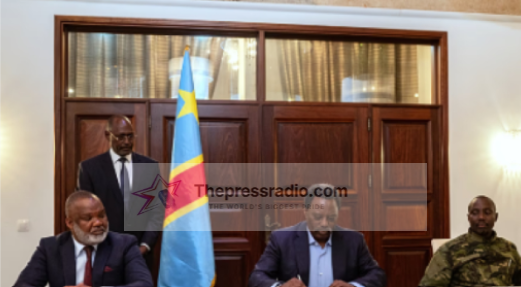
The accusations followed the emergence of a new political-military organisation known as the Front for the Refoundation of the Nation (FRN). The group is reportedly intended to bring together political and military forces opposed to the administration of President Félix Tshisekedi, with the stated aim of challenging the current government.
Reports indicate that Kabila is expected to lead the organisation, while figures associated with the M23 movement would occupy deputy leadership positions. The reported alliance has raised fresh concerns among government officials about the possibility of an expanded campaign against state institutions and security forces.
Kabila, who governed the DRC from 2001 to 2019, remains a significant figure in the country’s political history. He took over the presidency following the assassination of his father, Laurent-Désiré Kabila, and remained in office until Tshisekedi succeeded him in January 2019.
Relations between Kabila and the current administration have deteriorated amid disagreements over the country’s political direction and continuing insecurity in the east. Congolese authorities have repeatedly accused the former president of having links to the Congo River Alliance, a political-military coalition associated with the M23 rebellion.
Kabila has previously denied allegations linking him to the rebel movement. The latest accusations represent a further escalation in the dispute between the former president and the government, although the government’s claims should be distinguished from independently established findings.
The allegations come against the background of sustained fighting in eastern DRC, where M23 fighters have battled Congolese government forces and expanded their territorial control. The group’s offensives in early 2025 resulted in the capture of Goma, the capital of North Kivu, and Bukavu, the capital of South Kivu, deepening an already severe security and humanitarian crisis.
The conflict has displaced large numbers of civilians and increased pressure on regional and international efforts to secure a lasting ceasefire. Neighbouring Rwanda has faced repeated accusations from the Congolese government and international observers of supporting M23, allegations Kigali has disputed.
Kabila’s reported political-military initiative also comes amid debate over the DRC’s constitutional arrangements and the country’s future leadership. Opposition figures have expressed concern about discussions surrounding possible constitutional changes, which critics fear could pave the way for Tshisekedi to seek a third term. Under the current constitutional framework, the president is limited to two five-year terms.
The latest developments threaten to deepen political divisions at a time when the government is already dealing with armed conflict, displacement and pressure to restore security in the eastern provinces.
The allegations against Kabila and the reported formation of the FRN are likely to intensify scrutiny of the relationship between political opposition groups and armed movements operating in the country.
Source: Thepressradio.com