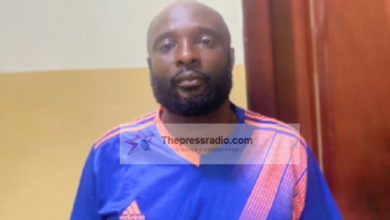


The people of Asante Akim North have now gone 115 days without the physical presence of their elected Member of Parliament, Ohene Kwame Frimpong, popularly known as OK Frimpong, following his arrest in the Netherlands.
The MP was reportedly arrested at Schiphol Airport in Amsterdam on May 10, 2026, over fraud allegations brought by authorities in the United States. His continued detention abroad has raised questions about the representation of his constituents and the circumstances under which his parliamentary seat could become vacant.
Although Frimpong has been unable to attend parliamentary proceedings, the situation does not automatically mean that his seat has become vacant under Ghana’s 1992 Constitution.
Article 47(1) of the Constitution provides for parliamentary constituencies, with each constituency expected to be represented by a Member of Parliament.
The challenge in the Asante Akim North case is that the Constitution does not specifically identify detention or extradition proceedings abroad as grounds for automatically removing an MP from office.
Article 97 outlines circumstances under which a Member of Parliament must vacate a seat. These include resignation, death, becoming disqualified from being elected, election as Speaker, expulsion for contempt of Parliament and certain circumstances involving prolonged absence from parliamentary sittings.
The Constitution also provides that an MP may lose the seat if the member is absent without written permission from the Speaker and cannot provide a reasonable explanation to the Parliamentary Committee on Privileges after missing 15 sittings.
However, questions have emerged over whether Frimpong’s prolonged absence can be regarded as unauthorised, particularly given reports that Parliament has been providing assistance to the detained MP.
The matter has therefore created a constitutional and parliamentary dilemma, with no straightforward provision appearing to address the situation of an MP detained abroad while facing legal proceedings.
Another important issue concerns the process for organising a by-election.
Under Article 112 of the Constitution, when a parliamentary vacancy occurs, the Clerk of Parliament is required to notify the Electoral Commission in writing within seven days. A by-election is then expected to be held within 30 days of the vacancy, except where the vacancy results from the death of an MP, in which case the period is extended to 60 days.
In Frimpong’s case, however, no vacancy has officially been declared.
Previous case involving Eric Amoateng
Ghana has previously faced a somewhat similar situation involving a Member of Parliament detained abroad.
In 2005, Eric Amoateng, then MP for Nkoranza North, was arrested in the United States over drug-related charges. He remained unable to attend Parliament during his detention.
Parliament subsequently granted him indefinite leave, but the decision was challenged at the Court of Appeal by Professor Stephen Kwaku Asare.
The Court of Appeal eventually ruled that Parliament’s attempt to grant the MP indefinite leave was unlawful.
Despite the ruling, Amoateng’s parliamentary seat was not immediately declared vacant. His seat was eventually declared vacant in February 2007 after he submitted his resignation to the Speaker.
The historical case has brought renewed attention to the current situation involving Asante Akim North.
With Frimpong having spent 115 days in detention, questions continue to surround how long his constituents can remain without an active representative in Parliament.
Among the issues being discussed are whether he remains the legitimate MP, whether his prolonged absence can trigger constitutional provisions concerning absentee members and whether the Speaker has any authority to declare the seat vacant under the circumstances.
The situation also raises broader questions about whether Ghana’s existing constitutional provisions adequately address cases where elected representatives are detained outside the country for extended periods.
For now, the people of Asante Akim North remain without their MP physically attending parliamentary proceedings, while the legal circumstances surrounding Frimpong’s detention continue to unfold.
The case could ultimately reignite calls for Parliament and other stakeholders to review the relevant provisions to ensure that constituents are not left without effective parliamentary representation for prolonged periods.
Source: Thepressradio.com