
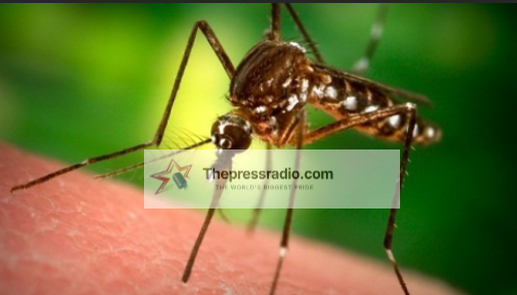
Have you ever noticed that mosquitoes seem to target you while leaving the person sitting next to you alone? Scientists say this perception is not entirely imagined. Mosquitoes can genuinely show preferences for certain people, and several biological factors may explain why some individuals attract more bites than others.
One of the most important signals mosquitoes use when searching for humans is carbon dioxide (CO₂). People release CO₂ every time they breathe, and mosquitoes can detect the gas and use it to locate potential hosts. Physical activity can increase breathing and CO₂ output, making a person easier for mosquitoes to detect.
As mosquitoes get closer, they rely on additional signals, including body heat and skin odour. Human skin releases a mixture of chemicals, while naturally occurring microorganisms on the skin contribute to each person’s distinctive scent. Research has found that differences in skin chemistry can influence how attractive someone is to mosquitoes.
A 2022 study published in Cell found an association between mosquito attraction and levels of certain carboxylic acids on human skin. People who consistently attracted more mosquitoes had higher levels of these compounds, suggesting that individual skin chemistry may be an important reason mosquitoes appear to favour some people.
Body heat is another factor. Mosquitoes can detect temperature differences as they approach a potential host, helping them identify a warm body nearby. This means that someone who is warmer or sweating after physical activity may provide several signals that help mosquitoes locate them.
Sweat and body odour can also influence mosquito attraction. Compounds associated with sweat, including lactic acid and ammonia, can contribute to the odour mosquitoes detect. The bacteria naturally living on a person’s skin also help shape that odour, and the combination differs from one individual to another.
Genetics may therefore play an indirect role. A person’s genes can influence skin chemistry, sweating and other characteristics that determine the scent released from the body. This does not mean that someone inherits a simple “mosquito magnet” trait; rather, several characteristics can combine to make a person more noticeable to mosquitoes.
Research has also examined whether blood type affects mosquito preference. Some controlled studies have found differences between blood groups, including greater attraction to people with type O blood in particular experiments. However, blood type is only one possible factor and does not determine whether a person will be bitten.
What a person wears may also influence mosquito behaviour. Studies have found that mosquitoes can respond to visual cues, particularly after they have already detected carbon dioxide. Dark or high-contrast clothing may therefore make a person easier for some mosquito species to identify.
Pregnancy has also been associated with increased mosquito attraction in some research. Scientists have suggested that increased carbon dioxide output and changes in body temperature may contribute to this effect, although the findings depend on the mosquito species and conditions being studied.
Importantly, not every mosquito species behaves in exactly the same way. Different species respond to different combinations of chemical, visual and physical signals. This means that someone who attracts many mosquitoes in one environment may not necessarily experience the same level of attraction elsewhere.
Ultimately, mosquitoes do not simply choose their targets at random. They use a combination of carbon dioxide, body heat, skin odour, moisture and visual signals to locate people. Differences in these characteristics help explain why one person can walk away from an outdoor gathering with several bites while another appears almost untouched.
So, if mosquitoes seem to prefer you, there may actually be a scientific explanation. Your unique body chemistry and the signals you naturally produce could simply make you easier for them to find.
Source: Thepressradio.com