Unpacking the Ghana Service Passport Scandal: What the Document Is and Why Individuals Paid Up to $29,000

Recent disclosures from Ghana’s Ministry of Foreign Affairs revealing that individuals allegedly paid up to US$29,000 to acquire government-issued service passports have thrust the elite travel document into the center of an unfolding national scandal.
According to a November 8, 2026 statement from the Ministry, petitions submitted to the state revealed that one individual paid US$29,000 in 2023 to secure the document, while another petitioner reported paying US$5,000 in 2026. The alarming revelations have triggered immediate administrative action, resulting in the interdiction of two passport officials and the outright cancellation of ten illegally issued service passports.
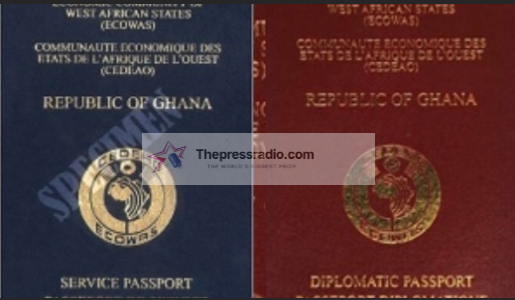
Under Section 7 of the Passports and Travel Certificates Act of 1967 (NLCD 155), a service passport is an official travel document reserved exclusively for public servants and designated personnel undertaking official state assignments abroad who do not qualify for diplomatic passports. Unlike ordinary passports used by citizens for personal holidays, private business, or overseas study, a service passport formally identifies the holder to foreign immigration and customs authorities as a representative traveling on authorized government business.
The intense demand and exorbitant sums paid by unauthorized citizens stem primarily from the lucrative travel privileges attached to the document. Holders of Ghanaian service passports benefit from bilateral visa-waiver agreements that allow visa-free travel to up to 59 countries. This enables individuals to completely bypass standard consular procedures, eliminating paperwork, application fees, mandatory interview appointments, and the risk of visa denials. Furthermore, holders typically enjoy expedited processing at international customs and border control checkpoints.
Official data from the Passport Office shows a significant rise in the issuance of these documents over recent years. Between 2009 and 2016, Ghana issued 1,397 service passports. That figure rose sharply to 3,174 between 2017 and 2024, with an additional 754 issued from 2025 to date, bringing the total number of active or past service passports to 5,325.
The revelation that non-eligible private citizens purchased these restricted state credentials for illicit personal travel has raised serious national security and diplomatic concerns. Lawmakers and public policy experts have called for an extensive audit of all issued service passports to restore institutional integrity and protect Ghana’s bilateral travel agreements.
Source: Thepressradio.com