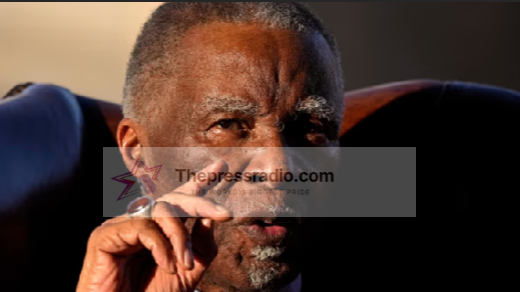
Former South African President Thabo Mbeki has denied allegations that he directed or approved efforts to suppress investigations and prosecutions of crimes committed during apartheid, as he testified before a judicial inquiry examining the handling of unresolved cases referred by the Truth and Reconciliation Commission (TRC).
Mbeki appeared before the inquiry in Johannesburg on October 19, 2026, amid renewed scrutiny of why numerous apartheid-era crimes have remained unresolved decades after South Africa’s transition to democracy.
The inquiry is examining allegations that political decisions and interference affected the investigation and prosecution of cases involving killings, disappearances and other serious human rights violations committed under the apartheid system.
During his testimony, Mbeki rejected claims that he had ordered officials to stop investigations or protect former security personnel from prosecution. He also denied entering into secret arrangements intended to prevent cases referred by the TRC from proceeding through the criminal justice system.
The allegations have drawn attention to the government’s handling of cases identified during South Africa’s truth and reconciliation process. The TRC was established to investigate human rights violations committed under apartheid and provide a framework for truth-telling, accountability and reconciliation following the end of minority rule.
The commission referred approximately 300 cases for further investigation and possible prosecution. However, only a small number reportedly resulted in successful prosecutions, leaving many victims’ families without clear answers about the circumstances surrounding the deaths and disappearances of their relatives.
The limited progress on these cases has prompted criticism from victims’ families, human rights advocates and others who argue that the failure to pursue prosecutions has undermined efforts to secure justice for apartheid-era crimes.
Mbeki’s testimony also addressed remarks he made in a 2003 parliamentary address concerning possible arrangements with former security personnel. He maintained that his comments were intended to encourage participation in the truth process rather than provide blanket immunity or prevent criminal proceedings.
Critics have questioned whether the government’s response to the TRC’s findings contributed to delays or political interference in the prosecution of cases. Mbeki’s denials are therefore being considered against the wider historical record and evidence presented to the inquiry.
The inquiry, ordered by President Cyril Ramaphosa, is seeking to establish why so many cases remained unresolved and whether decisions by successive administrations affected the independence of investigators and prosecutors.
For families who have spent decades seeking answers, the proceedings represent an opportunity to examine the institutional and political factors that may have contributed to the lack of progress. Many continue to seek accountability and information about relatives who were killed or disappeared during apartheid.
The inquiry is expected to assess testimony, documentary evidence and the actions of relevant institutions before drawing conclusions. Mbeki’s rejection of the allegations does not, by itself, settle the questions before the panel.
The proceedings have renewed debate about South Africa’s transitional justice process and the responsibility of democratic institutions to investigate serious crimes regardless of when they occurred or the positions held by those implicated.
The inquiry’s findings could help clarify how decisions were made concerning apartheid-era cases and identify any failures that contributed to the delays. Until the inquiry reaches its conclusions, allegations of deliberate political interference must remain distinguished from facts established through evidence.
Source: Thepressaradio.com