

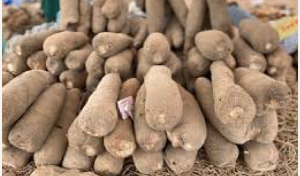
The annual yam harvest and commercial season in Atebubu has officially commenced following the performance of traditional rites by Nana Sarfowaa, the Queen Mother of the Atebubu Yam Market.
The ceremony marked an important moment for farmers, traders and other stakeholders who depend on yam production and trade for their livelihoods. In Atebubu, yam is not only an important food crop but also a major agricultural commodity that supports economic activity within the community and surrounding areas.
Nana Sarfowaa, who serves as the Queen Mother of the Atebubu Yam Market, led the traditional observances to signify the opening of the season. The rites reflect the longstanding relationship between agriculture, traditional authority and community life, with traditional practices continuing to play a role in marking significant stages of the farming calendar.
The opening of the yam season is particularly significant for farmers who have spent months cultivating and preparing their crops for the market. It also creates opportunities for traders and buyers as freshly harvested yams begin entering the commercial market.
Atebubu has long been associated with agricultural production, benefiting from its location within one of Ghana’s important farming areas. Yam production contributes to food supplies while providing income for farmers, transport operators, market traders and other people involved in the agricultural value chain.
The beginning of the sales season is therefore expected to generate increased activity at the Atebubu Yam Market as farmers bring their produce to market and traders seek supplies for consumers and other destinations.
Beyond its economic importance, the traditional opening demonstrates how local customs continue to coexist with modern agricultural commerce. The involvement of traditional leadership gives the occasion a cultural dimension and reinforces the community’s connection to its farming heritage.
Yam remains an important staple in Ghanaian households and is consumed in several forms, including boiled yam, fried yam and pounded yam. The crop is also traded across different parts of the country, making major yam-producing communities important links in Ghana’s agricultural supply chain.
For farmers, a successful harvest season can provide crucial income to support household expenses and future farming activities. At the same time, stable supplies of yam are important to consumers and traders who depend on the crop throughout the year.
The traditional rites performed by Nana Sarfowaa consequently represent more than a ceremonial opening. They signal the transition from cultivation to harvesting and trading, while bringing attention to the cultural traditions surrounding one of Ghana’s most important food crops.
As the new season gets underway, farmers and traders in Atebubu will be looking forward to strong demand, favourable market conditions and a productive trading period.
The event also highlights the broader importance of preserving traditional practices while supporting agricultural communities whose work remains central to food production and local economic development.
With the yam harvest and sales season now formally opened, Atebubu once again takes its place at the centre of the seasonal yam trade, connecting farmers and consumers through a crop that remains deeply embedded in Ghanaian food culture and rural livelihoods.
Source: Thepressradio.com