
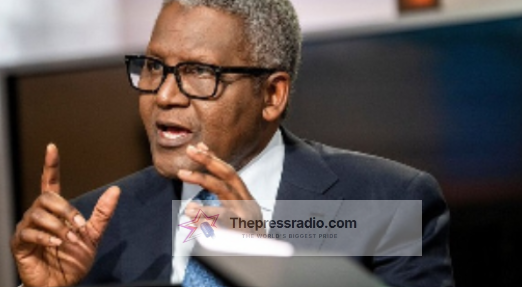
Africa’s richest man, Aliko Dangote, has seen his fortune increase by more than $5 billion since the Iran war began, with the strong demand for refined petroleum products emerging as a major factor behind the rise.
According to reports, Dangote’s $20 billion refinery in Lagos reached full operating capacity shortly before the United States and Israel launched attacks on Iran on February 28, 2026. The conflict subsequently disrupted global fuel supplies and increased demand for petroleum products from alternative suppliers.
The Dangote Petroleum Refinery has benefited significantly from the disruption. As buyers searched for alternative sources of fuel following interruptions to supplies from the Middle East, the Nigerian refinery expanded its exports to several international markets.
The refinery has reportedly become an important supplier of aviation fuel and diesel to Europe and other African countries. Data from S&P Global Energy indicated that the facility was the world’s largest single exporter of jet fuel during April and May. A senior Dangote Industries executive also said the refinery became Europe’s largest supplier of jet fuel and diesel in July.
The conflict has created major challenges for countries that depend heavily on imported refined petroleum products. The closure of the Strait of Hormuz, a major global energy route, disrupted supplies and placed additional pressure on fuel markets.
Africa has been particularly exposed because many countries on the continent produce crude oil but depend on other regions for refined petroleum products. East African countries, for instance, have historically sourced a significant share of their refined fuel from the Middle East.
The supply disruptions consequently created an opportunity for the Dangote refinery to increase its presence in regional and international markets.
The facility has supplied fuel to several African markets while also expanding its reach into Europe. It shipped jet fuel to the United States for the first time this year, further demonstrating the growing international role of the Nigerian refinery.
The increase in Dangote’s wealth also comes as his refinery prepares for a potential major listing on the Nigerian Exchange. The company has secured a $1 billion underwriting programme ahead of a planned initial public offering and has applied to raise about $5 billion through the proposed listing.
The planned IPO could become one of Africa’s largest public offerings and has attracted considerable attention from investors.
Dangote’s business empire has therefore benefited from a combination of increased demand for refined petroleum products, higher energy prices and growing investor interest in the refinery.
However, the same geopolitical crisis that has created an opportunity for Dangote has placed significant pressure on consumers across Africa. Higher fuel costs and disruptions to energy supplies have contributed to increased economic difficulties in several countries.
The situation highlights the contrasting effects of global energy disruptions. While countries and consumers that depend on imported fuel face rising costs, producers and refiners with available supplies can benefit from increased demand.
For Dangote, the refinery has increasingly become the central engine of his wealth. The businessman built much of his fortune through businesses including cement, sugar and other essential products, but his massive investment in petroleum refining has significantly expanded his position in the global energy market.
The refinery’s growing export business could further strengthen Dangote’s position if international demand remains strong.
With plans to expand refining capacity and potentially list the refinery publicly, the businessman is positioning his energy business for further growth in the coming years.
The latest increase in his fortune therefore reflects not only the impact of the Iran conflict but also the growing importance of Dangote’s refinery in global and African fuel markets.
Source: Thepressradio.com