
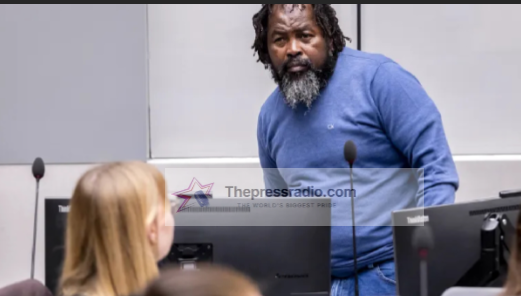
The International Criminal Court (ICC) has convicted former Seleka militia commander Mahamat Said Abdel Kani of crimes against humanity linked to the violence that occurred in the Central African Republic (CAR) in 2013.
Judges at the ICC in The Hague on Wednesday, September 23, 2026, found Said guilty on four counts of crimes against humanity, including persecution and torture.
The 56-year-old former rebel commander was accused of playing a leading role at a detention facility in the CAR capital, Bangui, where people suspected of supporting then-President François Bozizé were detained during the country’s conflict.
According to the judgment, Said and other Seleka members were involved in the mistreatment of detainees at the Central Office for the Repression of Banditry, commonly known by its French acronym OCRB.
The ICC found that Said had authority over the detention facility and was involved in the treatment of prisoners held there.
Prosecutors had alleged that detainees were subjected to torture and other forms of mistreatment. The court ultimately found Said guilty of four crimes against humanity charges, while dismissing several war-crimes charges after determining that the armed conflict had ended when some of the alleged offences took place.
Said denied the charges throughout the proceedings.
The judgment follows a lengthy legal process that began years after the events in question. According to the ICC, Said was surrendered to the court by Central African authorities in January 2021, while his trial formally opened in September 2022.
The court heard evidence from dozens of witnesses during the proceedings. The ICC said 58 prosecution witnesses and three defence witnesses gave evidence, while 32 victims were granted the right to participate in the proceedings.
Said’s conviction is significant in the ICC’s investigation into the Central African Republic because he is the first member of the Seleka group to be convicted by the court.
The Seleka coalition, a predominantly Muslim rebel alliance, seized power in 2013 and ousted President François Bozizé. The takeover contributed to a wider conflict involving the mainly Christian and animist anti-Balaka militias.
The violence resulted in thousands of deaths and displaced large numbers of people as competing armed groups fought for control of the country.
The ICC has investigated crimes committed during the Central African Republic conflict since 2014. Before Said’s conviction, the court had convicted two senior anti-Balaka figures, including former parliamentarian Alfred Yekatom and former sports minister Patrice-Edouard Ngaissona.
Said’s sentence was not announced alongside the conviction. The ICC said a separate hearing will determine the appropriate sentence.
The latest judgment therefore concludes the trial phase of the case but leaves the question of punishment for a later stage.
The conviction also forms part of broader international efforts to establish accountability for crimes committed during the Central African Republic’s prolonged periods of political instability and armed conflict.
The country has experienced greater political stability since a 2019 peace agreement, although justice and accountability for earlier abuses remain ongoing issues.
With the latest ruling, the ICC has now secured convictions involving both sides of the armed conflict that followed the 2013 change of government.
Further proceedings will determine Said’s sentence, while the court’s judgment remains subject to the applicable appeal process.
Source: Thepressradio.com