Ghana’s Rivers Face a Growing Crisis as Pollution and Weak Treatment Systems Threaten Public Health

Ghana’s freshwater rivers are facing one of their most alarming environmental challenges yet, as pollution from mining activities, land degradation, and failing water-treatment systems combine to push several water bodies toward a dangerous state. Environmental observers and water experts warn that the quality of water flowing through many communities has deteriorated sharply, posing significant threats to public health, agriculture, and local ecosystems.
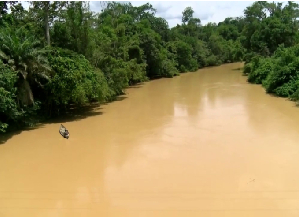
Across the country, rivers that once sustained households and farmlands are now increasingly contaminated with high levels of turbidity and suspended particles. Much of this pollution is traced to mining operations — both legal and illegal — which release harmful substances, including heavy metals, into nearby river systems. Sediment from mining sites and eroded landscapes further clouds the water, making treatment more difficult and, in some cases, impossible for local facilities to handle.
The situation is made worse by the fact that several water-treatment plants are unable to cope with the volume and complexity of the pollutants entering their systems. Some facilities operate with outdated equipment, while others struggle due to inconsistent maintenance or underfunding. As a result, untreated or partially treated water finds its way into communities, heightening the risk of waterborne diseases and long-term health complications for residents who rely on rivers for daily use.
Experts caution that this ongoing water-quality decline could lead to widespread socio-economic consequences. For communities along the riverbanks, fishing activities have already been disrupted as aquatic life diminishes due to low oxygen levels and toxic contamination. Farmers who depend on river water for irrigation also face reduced crop yields and soil damage caused by polluted water sources.
Beyond immediate health and livelihood concerns, the environmental impact is equally troubling. River ecosystems, which support diverse species of plants and animals, are becoming increasingly unstable. As pollution levels rise, the natural balance within these ecosystems is disrupted, threatening biodiversity and weakening natural water-purification processes.
Environmental specialists argue that reversing this trend requires urgent intervention. They call for stronger enforcement of mining regulations, stricter monitoring of upstream activities, and the rehabilitation of degraded riverbanks. There is also a renewed push for increased investment in modern water-treatment technology, improved operational capacity at existing plants, and consistent water-quality testing across all regions.
Community education is another critical component of the solution. By empowering residents with knowledge about environmental protection and the dangers of water pollution, experts believe that local involvement can supplement government efforts. Community watchdog groups and river-protection initiatives have already begun forming in some areas, signaling a growing public demand for action.
Ghana’s water crisis serves as a powerful reminder that access to clean, safe water is not guaranteed unless it is actively protected. As river pollution intensifies and treatment systems struggle to keep up, the country faces a pivotal moment. Without coordinated action from government agencies, environmental groups, and local communities, the damage to Ghana’s water systems could become increasingly difficult to reverse.
For now, environmental advocates remain hopeful that raising awareness will push stakeholders toward long-term solutions. Ghana’s rivers are essential life sources, and their protection is not optional — it is a national priority that demands immediate and sustained attention.
Source: Thepressradio.com