

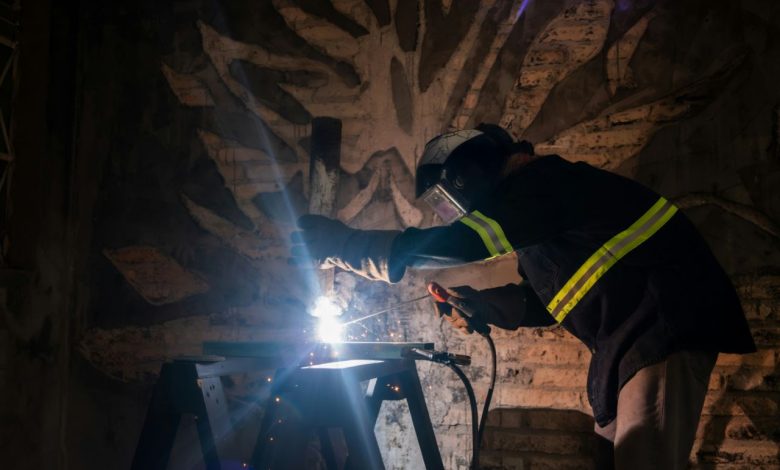
Ghana’s oil and gas, mining and industrial sectors depend on thousands of welds, pipelines, pressure vessels and metal structures that must operate safely over many years. Many of the defects that can affect this equipment are not visible from the surface, making routine inspection an essential part of asset maintenance and industrial safety.
Non-destructive testing, or NDT, enables engineers to assess the condition of equipment without dismantling it or interrupting operations. In 2025, Ghana secured more than US$3.5 billion in new upstream oil and gas investment commitments, including a US$2 billion framework agreement for 20 new wells in the Jubilee and TEN fields and a US$1.5 billion memorandum of intent to expand operations in the Offshore Cape Three Points field.
At the same time, the government is advancing plans to modernise the VALCO smelter and develop Ghana’s first alumina refinery; the investor-selection process was initiated in late 2025, with further negotiations continuing in 2026. As these energy and industrial assets are developed, expanded and maintained, the need for reliable inspection and quality-assurance systems becomes increasingly important across Ghana’s industrial economy.
Industrial radiography is one of several non-destructive testing methods used to inspect welds and metal components. It works much like a medical X-ray. Instead of examining bones, it allows engineers to identify cracks, corrosion and other internal flaws in metal components. According to the International Atomic Energy Agency (IAEA), X-ray and gamma-ray inspection remain among the principal methods used to examine welds and metal structures in the oil, gas and mining industries.
The same technology is also indispensable in nuclear power, where safety-critical equipment is subject to rigorous quality-control and inspection procedures throughout construction and operation. Companies with extensive experience in nuclear construction, such as Rosatom, rely on advanced non-destructive testing as part of these processes, supported by documentation in line with applicable international safety standards. These inspection procedures are a fundamental part of the nuclear industry’s safety culture, helping ensure that critical infrastructure can operate safely for decades.
Ghana’s own nuclear ambitions make these capabilities increasingly relevant. In February 2025, an IAEA SEED mission confirmed that the country continues to follow international safety standards during the site selection process for its first nuclear power plant. Whether Ghana ultimately builds a large reactor or deploys small modular reactors, certified non-destructive testing will be required throughout construction as part of the project’s quality-assurance and regulatory framework.
Demand for NDT is growing worldwide. According to Mordor Intelligence, the global market is expected to grow from $22.86 billion in 2025 to $33.78 billion by 2031. Inspection is increasingly combined with artificial intelligence, allowing operators to predict equipment failures before they happen. Major international engineering and inspection companies are also expanding digital inspection services.
Swiss-based SGS, which operates in more than 100 countries, and Germany’s TÜV Rheinland, active across Europe, Asia, the Middle East and Africa, provide non-destructive testing, certification and asset integrity services for energy, mining and infrastructure projects worldwide, including across Africa.
The benefits of these technologies are increasingly recognised across Africa as well. Discussing the development of Nigeria’s industrial sector, the Vice President of the Institute of Non-destructive Testing of Nigeria (INDTN) Jasper Ikpesu has argued: “NDT is crucial for economic development, as it helps ensure the reliability, safety and efficiency of critical infrastructure and industries. By investing in NDT, Nigeria can reduce costs, improve productivity and increase its competitiveness in the global economy.” The same principle is equally relevant to Ghana’s expanding industrial sectors.
Technology is only one part of an effective inspection system. It also depends on qualified personnel, clear procedures and independent certification. ISO 9712, an international standard for the qualification and certification of non-destructive testing personnel, provides one widely used framework for demonstrating professional competence. Expanding local training and certification capacity could support Ghanaian engineers and technicians working across energy, mining, manufacturing and, in the longer term, nuclear-related projects.
As Ghana’s industrial infrastructure evolves, inspection will remain a routine but important element of safety, maintenance and quality assurance. Non-destructive testing cannot eliminate every operational risk, but it gives operators information that may help them identify defects earlier and make better-informed maintenance decisions. Building local technical capability alongside recognised standards and effective oversight would help ensure that this capacity develops in step with Ghana’s industrial ambitions