

South Africa Defends BRICS Naval Drills Amid Geopolitical Tensions
South Africa has defended its participation in a week-long BRICS naval exercise off its coastline, describing the operation as “essential” for regional maritime security and defence cooperation. The exercise involves Brazil, Russia, India, China, and South Africa, and has drawn international attenti
Ogyem Solomon
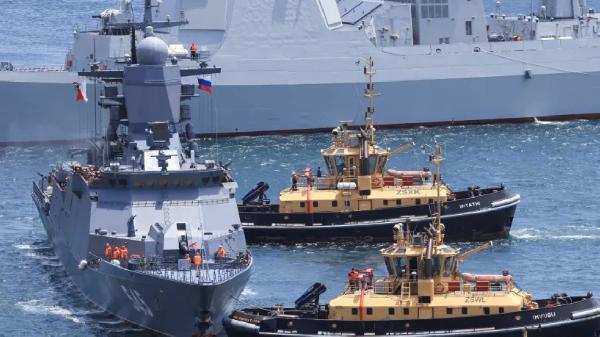
South Africa has defended its participation in a week-long BRICS naval exercise off its coastline, describing the operation as “essential” for regional maritime security and defence cooperation. The exercise involves Brazil, Russia, India, China, and South Africa, and has drawn international attention due to the inclusion of countries currently facing diplomatic scrutiny.
According to Pretoria, the naval drills aim to enhance joint operational capabilities, strengthen maritime security, and improve interoperability among the participating navies. Officials emphasised that the exercises are focused on addressing common maritime threats such as piracy, smuggling, and illegal fishing, and are not directed against any specific country.
The announcement comes at a time of heightened geopolitical tensions. Russia’s ongoing military activities in Ukraine, Iran’s regional posture, and broader international concerns over sanctions have led some observers to question the political implications of South Africa working closely with certain BRICS partners. Despite this, South African authorities insist that the drills are strictly part of multilateral defence cooperation and do not signal alignment with any military agenda beyond the region.
Government spokespeople have highlighted that South Africa’s involvement in BRICS extends beyond military exercises. The bloc’s cooperation spans economic, social, and security domains, with member states collaborating on development, trade, and capacity-building initiatives. Within this context, military exercises are considered a natural extension of partnership and readiness rather than a provocative act.
The exercises have sparked discussion among domestic political analysts and defence experts. Some caution that South Africa must carefully manage its global diplomatic relationships to avoid unintended fallout with Western nations. Others argue that the country has the right to engage in sovereign defence activities and that participating in regional security drills ultimately promotes stability, which benefits both Africa and the international community.
Observers note that the timing and scale of the drills underscore South Africa’s commitment to maintaining a capable and responsive navy while reinforcing its status as a key maritime actor in the Southern African region. The exercises also provide opportunities for training, knowledge exchange, and the strengthening of operational standards across partner navies.
As the week-long drills continue, attention is focused on how South Africa will balance its strategic interests within BRICS with its broader relationships with traditional Western allies. Analysts suggest that careful diplomacy will be essential to ensure that participation in the exercises is seen as a defensive and collaborative measure rather than a political statement.
South Africa’s handling of the drills reflects a broader trend among emerging powers seeking to assert influence while navigating complex global dynamics. By emphasising regional security, operational readiness, and multilateral cooperation, Pretoria aims to demonstrate that its defence initiatives are pragmatic, not confrontational.
Source: Thepressradio.com
More Related Articles
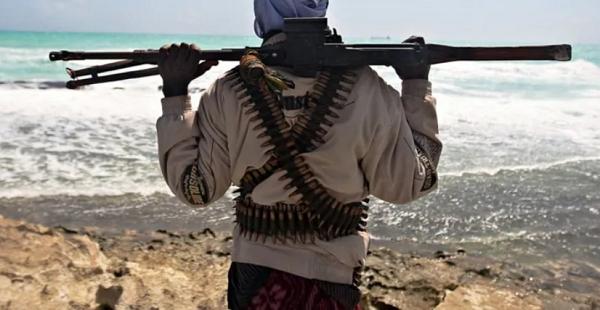
Nigeria reels under surge of terror and kidnapping attacks
Nigeria is facing an alarming rise in insecurity, with reports showing that 34 out of 36 states recorded 137 cases of terror attacks and kidnappings within just four weeks. The figures underscore the growing threat posed by militant groups, armed gangs, and criminal networks across the country. The
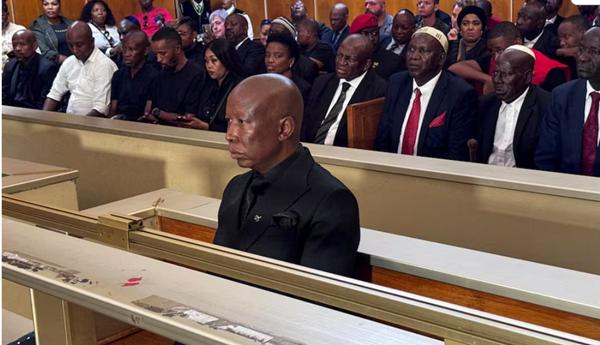
Supporters Rally as Julius Malema Awaits Court Sentence in South Africa
Supporters of South African opposition leader Julius Malema gathered in large numbers outside a Johannesburg court as the outspoken politician awaited sentencing in a high-profile legal case that has attracted national and regional attention. Malema, who is the leader of the Economic Freedom Fighter
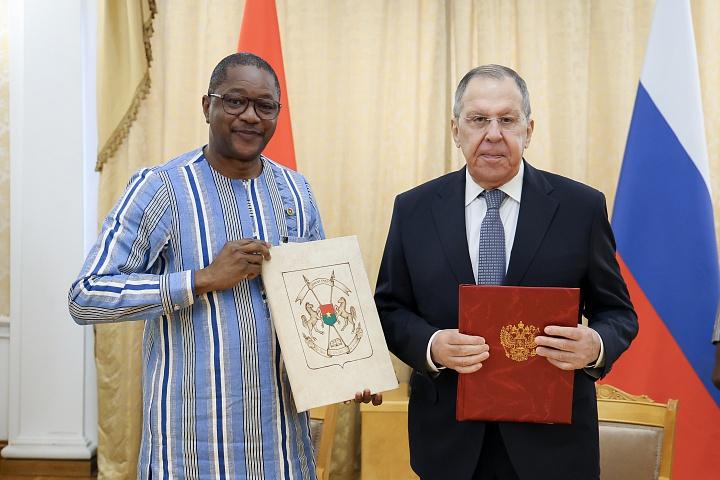
Russia, Burkina Faso Sign Agreements for Advancing Bilateral Trade, Economic and Military Partnerships
Russia and Burkina Faso have moved quickly to finalise a number of key documents that forms the bedrock of their future strategic partnership. The agreements signed cut across several other agencies, indicating concrete, practical progress in delivering on the understandings reached by both leaders,