

How Nuclear Energy Can Shape Ghana’s Digital Future
The number of Internet users across the African continent — Ghana included — continues to grow every year. Stable internet access rests on several factors coming together: reliable data centres, affordable tariffs and overall coverage. Data centres are an important of the puzzle. They require a lot
Junior
The number of Internet users across the African continent — Ghana included — continues to grow every year. Stable internet access rests on several factors coming together: reliable data centres, affordable tariffs and overall coverage.
Data centres are an important of the puzzle. They require a lot of energy and a stable power supply to function properly. Currently only 1% of data centres worldwide can be found in Africa, even though new Internet users on the continent join the worldwide web at an accelerated rate.
Internet coverage in Ghana is high: 70% of residents had access to the web in 2025, and hundreds of thousands new users join the web each year. With the continent getting ready for a digital leap, Ghana is also working in that direction. The government has already made improved digital education part of the country’s course for 2026.
Internet providers followed suit and are making plans to improve infrastructure to meet Ghana’s growing demand. Now the question is how the infrastructure can be enhanced to support the rapid economic growth and make stable Internet a reality for millions.
What is the current energy situation in Ghana — regarding the Internet-
Accra is Ghana’s central digital hub. The biggest Internet data centres there — Paix and Digital Realty — consume several Megawatts (MW) of power. They are enough to cover current mobile operators’, banking, cloud services and local enterprises’ needs.
However, AI technologies and advanced fintech systems — which Ghana is looking to add to its roster — require more power. Ghana’s current power mix consists of thermal (primarily fuelled by natural gas), which accounts for roughly two-thirds of electricity supply — and hydropower (generated by plants such as Akosombo, Kpong and Bui).
This combination has supported steady economic and digital growth, but each source comes with technological constraints. Hydropower output fluctuates depending on rainfall, while thermal needs a consistent fuel supply — and is thus exposed to global price dynamics.
As electricity demand rises — driven not only by households and enterprises but also by the growing digital infrastructure — questions of grid resilience, price stability and energy security become increasingly important.
How can Ghana make the leap in terms of infrastructure-
A stable and cheap power supply — to scale the country’s infrastructure and increase data centres’ operating power — could be the answer. Ghana can build on South Africa’s experience here: it remains one of the most developed digital markets on the continent. Koeberg, South Africa’s nuclear power plant (NPP) whose power output is close to 2000 MW, is part of the overall power supply chain there.
According to International Atomic Energy Agency (IAEA) recommendations, a nuclear power unit should account for about 10% of a country’s total power system. This makes small modular reactors (SMRs) a universal solution at the initial stage of introducing nuclear energy to a country’s power mix.
The construction period for SMRs is shorter than that of higher-capacity alternatives. SMRs can serve as an alternative to traditional energy sources, while also allowing the country to reduce its dependence on fuel imports and weather conditions. SMRs can be scaled as demand grows and energy needs evolve.
How do other countries cope with the growing Internet demand-
Many of the countries at the forefront of artificial intelligence are reinforcing or expanding their nuclear-energy capacity. The United States — home to nearly 45% of the world’s data centres — is pursuing plans to significantly expand nuclear energy generation, while Canada is refurbishing its reactor fleet.
China is simultaneously scaling AI infrastructure and building more reactors than any other country. In Asia and Latin America, policymakers are examining whether low-carbon energy generation — including small modular reactors — may provide the stability needed for a major digital leap.
In Africa, discussions around nuclear energy and small modular reactors have involved several established international vendors. France’s EdF, the United States’ NuScale Power, South Korea’s Korea Hydro & Nuclear Power (KHNP), and Russia’s Rosatom have all engaged with African governments in various ways: from feasibility studies and regulatory support to broader energy partnership agreements.
While no widespread SMR deployment has yet taken place on the continent, these early-stage engagements show growing interest in nuclear technologies as part of the long-term energy mix. Ghana is among the African countries — alongside Kenya, Rwanda, Ethiopia, Zambia and Uganda — exploring nuclear technologies to generate stable power.
What else a nuclear power supply can help Ghana with-
Nuclear-generated electricity can be used to help power the country in general, not just for Internet data hubs, offering a stable and low-carbon nationwide solution.
It can also make a country less reliant on imports — such as fossil fuel — and pave the way in other nuclear-adjacent areas, such as advanced medicine technologies and agriculture.
Finally, it can help boost education in technical fields such as engineering, something Ghana is already invested in. The literacy rate in Ghana significantly exceeds that of neighbouring countries and developing STEM education will further enhance the specialists’ competitiveness — and the country’s as a whole.
What’s next for Ghana-
Internet providers are already planning to widen infrastructure — and the role of digital education has also been underlined as a growth vector for this year. Current power capacity is already at a good level, but advanced technological solutions and wider coverage/access might call for a more flexible approach.
Ghana won’t be solving these challenges from scratch. It will be able to lean on experience from international partners, neighbouring countries and its own solid foundation. A nuclear energy solution can help the country’s growth in several areas at once, not just when it comes to reliable Internet access.
More Related Articles

WATCH: Ghanaian Innovator Tyrone Marhguy Builds a CPU from Scratch
Ghana has produced yet another remarkable tech talent in the person of Tyrone Iras Marhguy, a young innovator who has captured global attention for building a fully functional central processing unit (CPU) from scratch. This extraordinary achievement highlights not only his technical expertise but a
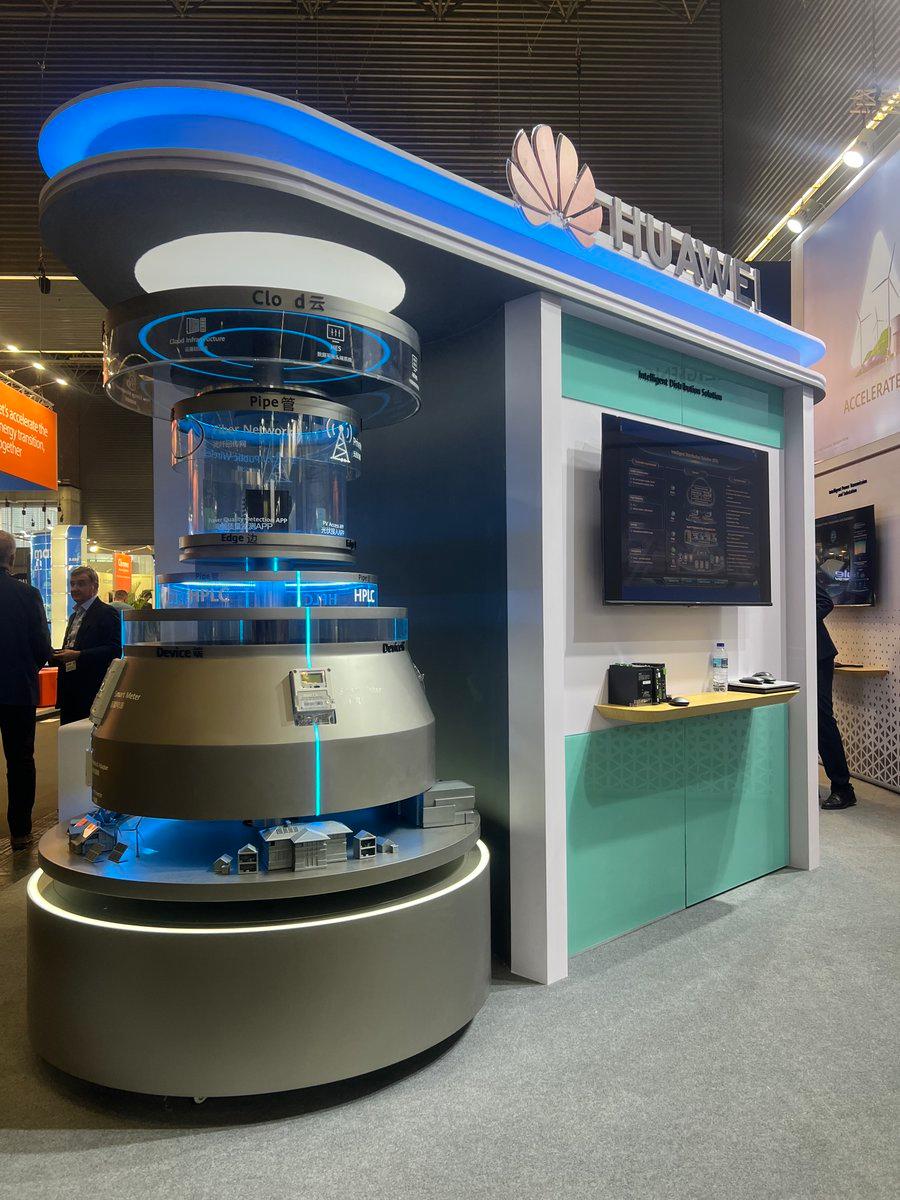
Huawei Highlights AI and Digitalization as Key to Power Grid Stability at MWC 2026
As global power systems face growing pressure from outages, renewable energy integration, and rising electricity demand, Huawei has emphasized the critical role of digitalization and artificial intelligence (AI) in ensuring grid stability and flexibility. In 2025 alone, more than 10 major power outa
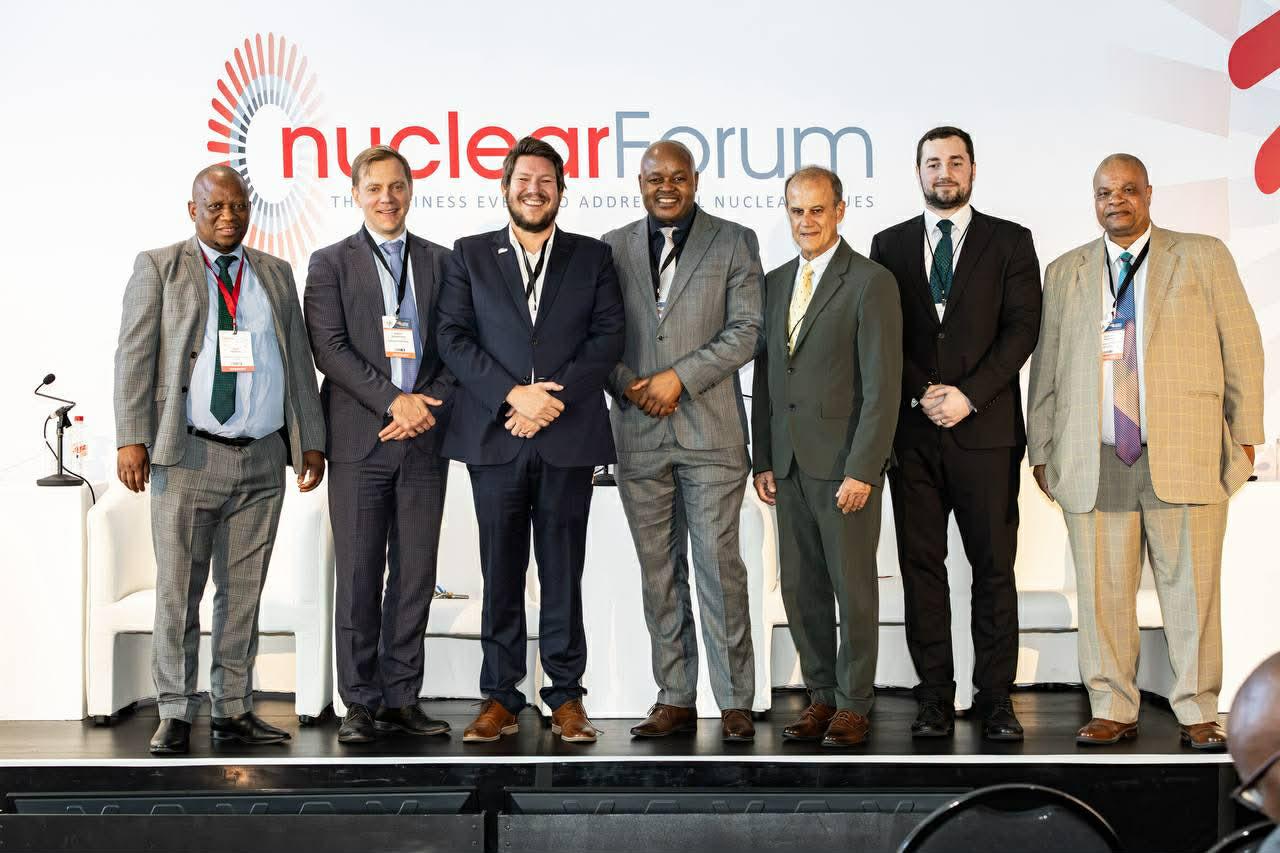
Rosatom Showcases Innovative Nuclear Technologies at Africa Energy Indaba in South Africa
Rosatom representatives took part in the Nuclear Forum at Africa Energy Indaba in Cape Town, highlighting infrastructure development, human capital, and the localisation of nuclear projects across the African continent. On 5 March 2026 in Cape Town (Republic of South Africa), the Nuclear Forum broug