

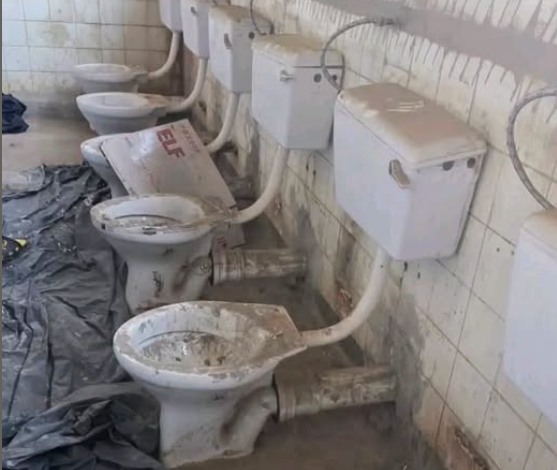
The condition of toilets at Mbare Flats has become a stark reminder of the gap between promises of urban renewal and the reality experienced by ordinary Zimbabweans.
Following renovations undertaken under President Emmerson Mnangagwa’s administration, residents and observers have expressed disappointment over what they see as inadequate improvements to facilities that should be among the most basic priorities in any housing rehabilitation programme.
Photographs and accounts highlighting the condition of toilets at the flats paint an uncomfortable picture. Instead of representing a meaningful improvement in public housing standards, the facilities have become a symbol of the frustration surrounding renovation efforts that residents expected to bring cleaner, safer and more dignified living conditions.
For families living in high-density accommodation, access to functional and hygienic toilets is not a luxury. It is a basic necessity. Poor sanitation can affect health, dignity and the overall quality of life, particularly in densely populated communities where residents depend on shared facilities.
The disappointment is especially significant because Mnangagwa came to power in 2017 after the removal of the late former president Robert Mugabe, promising a new direction for Zimbabwe. For many citizens, the change in leadership created expectations that long-neglected infrastructure would finally receive serious attention.
Yet the state of the Mbare Flats toilets raises an obvious question: if renovations cannot deliver satisfactory sanitation facilities, what exactly has been achieved?
Renovation projects are often presented to the public as evidence of progress. But progress should not be measured simply by the announcement of a project, the presence of construction work or the unveiling of renovated buildings. It should be measured by the quality, durability and usefulness of what residents are ultimately left with.
A toilet that remains inadequate after a supposed renovation is more than a construction problem. It represents a failure to translate public investment into tangible improvements in people’s daily lives.
Residents deserve better.
Mbare is one of Zimbabwe’s most historically significant high-density areas, and its communities have endured years of economic hardship and deteriorating infrastructure. Any programme aimed at improving the flats should therefore be judged by whether it restores dignity to the people who live there—not merely by whether officials can point to completed renovation works.
The condition of the toilets also raises questions about accountability. Who inspected the work before it was considered complete? What standards were used to assess the renovations? Were residents consulted about the problems they actually face? And, crucially, who is responsible when publicly funded renovations fail to deliver facilities that meet reasonable standards?
These questions cannot simply be dismissed as political criticism. They go to the heart of how public money is spent and whether government projects are genuinely improving people’s lives.
Zimbabweans have heard repeated promises of renewal, reconstruction and development. But for residents confronted with deteriorating or inadequate sanitation facilities, grand political slogans mean little if the most basic infrastructure remains below standard.
The Mbare Flats toilets should therefore serve as a warning: renovation without quality is not meaningful development.
If the government is serious about improving urban housing, it must go beyond cosmetic interventions and ensure that rehabilitation projects produce safe, functional and durable facilities. Independent inspections, transparent reporting on expenditure and meaningful engagement with residents would also help restore confidence in such programmes.
For the people of Mbare, the issue is ultimately simple. They do not need another promise. They need toilets that work, facilities that are hygienic and housing that allows them to live with dignity.
Anything less risks turning a programme advertised as renewal into yet another symbol of broken expectations.
Source: Thepressradio.com


