6-years On: Remembering the Life, Leadership, and Enduring Legacy of Former Prez Jerry John Rawlings

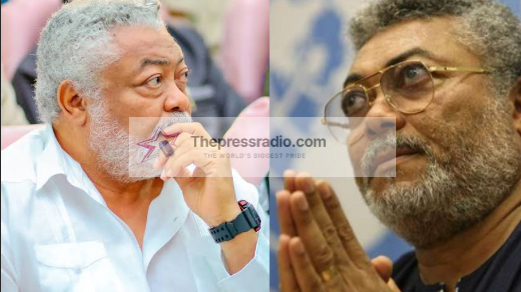
November 12 stands as a deeply consequential milestone in Ghana’s political calendar, marking the anniversary of the passing of former President Jerry John Rawlings, who died on November 12, 2020, at the Korle Bu Teaching Hospital in Accra at the age of 73 after a short illness.
Born in Accra on June 22, 1947, Rawlings rose from the ranks of the Ghana Air Force to become the longest-serving head of state in the nation’s history, steering Ghana through periods of intense military revolution, structural economic reform, and its eventual transition into sustained constitutional democracy. His dramatic entry onto the national stage began on May 15, 1979, with a failed military uprising against the government of General Fred Akuffo that landed him in detention under a death sentence. Less than three weeks later, on June 4, 1979, junior military officers staged a successful revolt that freed him and installed him as Chairman of the Armed Forces Revolutionary Council (AFRC).
Following a brief but sweeping anti-corruption campaign, Rawlings fulfilled his pledge to return the nation to civilian governance, handing over authority to elected President Dr. Hilla Limann in September 1979. However, citing widespread economic stagnation and governance failures, Rawlings intervened once again on December 31, 1981, overthrowing the Limann administration and establishing the Provisional National Defence Council (PNDC), which he led for over a decade.
In 1992, as Ghana embraced multiparty constitutional rule under the Fourth Republic, Rawlings retired from the military, founded the National Democratic Congress (NDC), and won the presidential election to become the first president of the Fourth Republic. He secured re-election in 1996 and served until January 7, 2001, when he peacefully handed over power to opposition leader John Agyekum Kufuor of the New Patriotic Party (NPP) after the NDC’s electoral defeat a historic transfer of authority that anchored Ghana’s democratic stability.
Six years after his death, Rawlings remains one of the most polarizing yet consequential figures in modern African history. Supporters revere him as a charismatic champion of social justice, probity, and accountability whose bold 1983 Economic Recovery Programme, backed by the International Monetary Fund and the World Bank, rescued Ghana’s economy from collapse. Critics, however, continue to highlight severe human rights abuses, political repression, and extrajudicial actions during his military administrations, notably the 1982 abduction and murder of three High Court judges and a retired army officer.
When news of his death broke just weeks ahead of the December 7, 2020 general elections, political campaigning across the country came to an immediate standstill. Then-President Nana Addo Dankwa Akufo-Addo declared seven days of national mourning and ordered flags to fly at half-mast, describing Rawlings’ passing as the fall of a great tree, while NDC presidential candidate John Dramani Mahama suspended his campaign tour in solidarity. Though debates surrounding his methods and policies persist, Jerry John Rawlings’ imprint on Ghana’s political identity and democratic journey remains indelible.
Source: Thepressradio.com