
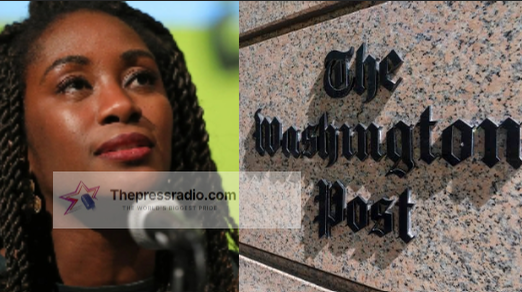
The Washington Post has been ordered to reinstate Ghanaian-American journalist and opinion columnist Karen Attiah after an independent arbitrator ruled that her dismissal from the newspaper was not justified.
Attiah was fired by the newspaper in September 2025 following social media posts she made after the assassination of conservative activist Charlie Kirk. The Washington Post had argued that her posts violated the organisation’s social media policy and amounted to gross misconduct.
However, private arbitrator Sarah Miller Espinosa ruled that the newspaper had failed to establish sufficient grounds for terminating Attiah and had violated the terms of its labour agreement. The ruling requires the newspaper to reinstate her and provide compensation for lost wages and benefits.
The dispute centred on comments Attiah made on social media following Kirk’s death. She defended her posts as part of her work as an opinion journalist, particularly given her focus on issues involving race, gender, human rights and political violence.
According to reports on the arbitration decision, Attiah had no previous disciplinary record during her time at The Washington Post. The arbitrator also found that the punishment imposed on her was disproportionate and that the newspaper had not demonstrated that her conduct amounted to gross misconduct.
Attiah joined The Washington Post in 2014 and went on to become a prominent voice in its opinion section. Her work has frequently addressed issues involving race, gender and global human rights.
Following the arbitration ruling, Attiah welcomed the decision and described it as confirmation of her position that she had been wrongfully terminated. She also expressed hope that the outcome would send a message about the importance of freedom of expression within journalism.
The case also attracted the attention of Attiah’s union, the Washington-Baltimore News Guild, which challenged the dismissal through the arbitration process. Her supporters argued that her role as an opinion columnist gave her considerable latitude to express views and analyse political and social developments.
The Washington Post, meanwhile, has acknowledged the arbitration outcome and said it respects the process. The newspaper has not indicated that it will provide further comment on the details of the ruling.
The arbitrator’s decision also addressed arguments that Attiah’s social media posts had contributed to security concerns involving the newspaper and its employees. The ruling reportedly rejected the idea that threats made by other individuals could be used as sufficient grounds to hold Attiah responsible for those actions.
The case has consequently generated wider discussion about the boundaries of social media use by journalists, particularly those working as opinion writers. News organisations increasingly have policies governing employees’ online activities, while journalists and their unions continue to argue for appropriate protections for professional expression.
For Attiah, the ruling represents a significant reversal nearly a year after her dismissal. Her reinstatement also marks an important development in a dispute that involved employment rights, editorial standards and questions surrounding freedom of expression.
The decision requires The Washington Post to restore her position and compensate her for the period she was out of employment. It remains to be seen how the newspaper will handle her return and whether any further developments will emerge from the dispute.
The case has nevertheless highlighted the challenges media organisations face when balancing newsroom policies with the rights of journalists, particularly in highly polarised political environments.
For the Ghanaian-American journalist, the arbitration ruling provides an opportunity to return to a newspaper where she spent more than a decade building her career and contributing to its opinion coverage.
Source: Thepressradio.com