

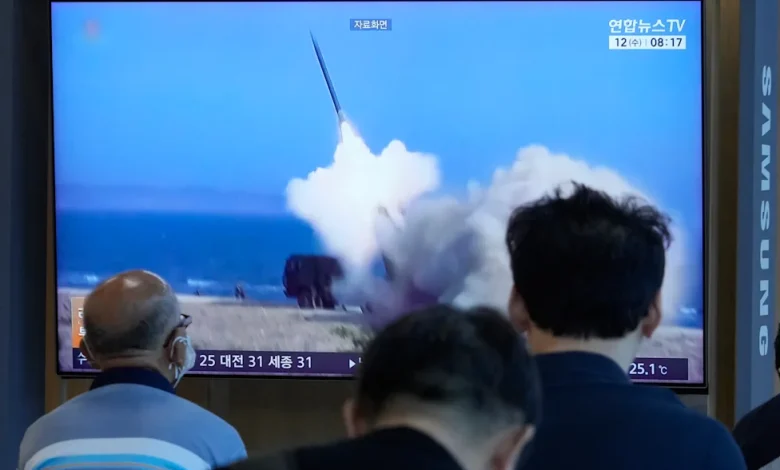
North Korea has carried out its second ballistic missile test in less than a week, raising tensions in East Asia just days before South Korea and the United States are scheduled to begin their annual joint military exercises.
South Korea’s Joint Chiefs of Staff said the missile was launched from the Wonsan area on North Korea’s eastern coast at around 6 a.m. Wednesday. The weapon traveled more than 700 kilometers (435 miles) before landing in waters between the Korean Peninsula and Japan, according to South Korean and Japanese authorities.
Japan’s Defense Ministry also detected the launch and said the missile fell outside Japan’s exclusive economic zone. Japanese Defense Minister Shinjiro Koizumi condemned the test, saying it represented a serious concern for the safety of Japanese citizens. Tokyo lodged a formal protest through diplomatic channels in Beijing.
The launch came just two days after Seoul and Washington announced that their annual large-scale military exercises would begin on Aug. 17. The drills, known as Ulchi Freedom Shield, are designed to strengthen the allies’ ability to respond to potential threats from North Korea.
Pyongyang has long criticized the exercises, describing them as preparations for an invasion. South Korea and the United States, however, maintain that the training is defensive and necessary to preserve military readiness.
North Korea has frequently responded to major South Korea-U.S. exercises with missile launches and aggressive rhetoric. During last year’s drills, North Korean leader Kim Jong Un accused Washington and Seoul of demonstrating a willingness to start a war and warned that Pyongyang would respond with what he described as overwhelming countermeasures.
The latest test follows another reported short-range ballistic missile launch on Aug. 6. South Korea, the United States and Japan detected that launch, marking North Korea’s first reported ballistic weapons test since late June. Pyongyang did not immediately acknowledge that earlier launch.
The series of tests comes amid a broader expansion of North Korea’s missile and nuclear capabilities. United Nations Security Council resolutions prohibit North Korea from conducting ballistic missile launches, but Pyongyang has continued developing and testing increasingly sophisticated weapons.
Analysts say North Korea’s weapons program serves both military and diplomatic purposes. Since high-level diplomacy between Kim Jong Un and then-U.S. President Donald Trump collapsed in 2019, North Korea has accelerated efforts to expand its nuclear and missile arsenals. Experts believe Pyongyang may view a stronger weapons stockpile as a way to gain leverage in any future negotiations, including possible demands for sanctions relief.
North Korea has also strengthened its international partnerships in recent years. Its relationship with Russia has deepened amid the war in Ukraine, with Pyongyang providing support to Moscow. At the same time, North Korea has sought closer ties with China, its traditional ally and a major economic lifeline.
Chinese President Xi Jinping visited Pyongyang in June, his first visit to the North Korean capital in seven years, highlighting the importance of the relationship between the two countries.
With the Ulchi Freedom Shield exercises set to begin on Aug. 17, regional governments are watching closely for further North Korean military activity. South Korea’s government has described the latest missile launch as an act of provocation and called on Pyongyang to halt such tests.
South Korea’s military has also reaffirmed that it remains prepared to respond to any further provocation in coordination with the United States. The latest developments underscore the continuing security tensions on the Korean Peninsula and the difficulty of reviving diplomatic talks over North Korea’s nuclear and missile programs.
Source: Thepressradio.com