

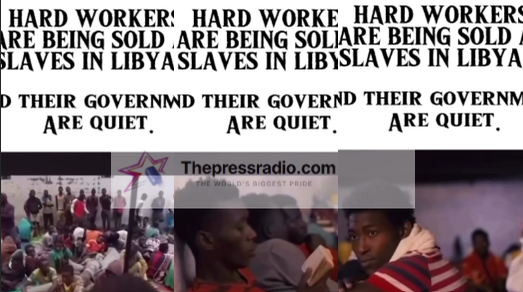
Reports and footage showing African migrants allegedly being subjected to human trafficking and sold in parts of Libya have once again drawn attention to the dangers faced by vulnerable people travelling through the country.
The issue is not entirely new. In 2017, the International Organization for Migration (IOM) documented accounts from West African migrants who said they had been bought and sold in garages and car parks in Libya. The reports described migrants being subjected to forced labour, detention and ransom demands.
Several investigations at the time also found evidence of trafficking networks exploiting migrants travelling through Libya, particularly those hoping to reach Europe. Survivors from countries including Senegal and other West African nations described being intercepted by smugglers and subsequently held against their will.
The revelations caused international outrage, particularly after video footage emerged in 2017 appearing to show African men being auctioned in Libya. The footage was investigated and verified by journalists, further intensifying calls for action against human trafficking networks.
The situation has raised serious concerns about the safety of Africans travelling through Libya. The country has long served as a major transit route for migrants attempting to cross the Mediterranean to Europe, leaving many vulnerable to smugglers and trafficking networks.
According to reports from the period, some migrants were allegedly forced to work without pay, while others were held until relatives could provide money for their release. Women and children were also reported among those exposed to exploitation.
The resurfacing of such footage has renewed questions about the protection of African migrants and the response of regional institutions.
Some observers have criticised African governments and regional organisations, including the African Union (AU) and Economic Community of West African States (ECOWAS), arguing that stronger measures are needed to protect citizens travelling through dangerous migration routes.
However, claims that there has been “no outrage” from these institutions should be treated carefully. The historical reports of trafficking in Libya generated condemnation from international organisations and African authorities, while efforts have also been undertaken to assist migrants in returning to their home countries.
The IOM, for example, has supported voluntary returns of migrants from Libya and provided assistance to vulnerable people seeking to return home.
The latest footage should therefore be viewed within the broader context of the long-running migrant trafficking crisis in Libya rather than as proof of a completely new development.
The reports nevertheless highlight a disturbing reality: vulnerable African migrants can face serious risks when travelling through trafficking routes, particularly when they lack documentation, money or reliable support.
The issue reinforces the importance of combating human trafficking, protecting migrants and ensuring that people considering dangerous migration routes have access to accurate information about the risks involved.
Any newly circulating video should also be independently verified before its location, date and circumstances are presented as established facts.
Watch the video below:
Source: Thepressradio.com


