Kofi Job Company Demolishes Unauthorized Structures as Dozens Lose Properties in Kona Quarry Buffer Zone

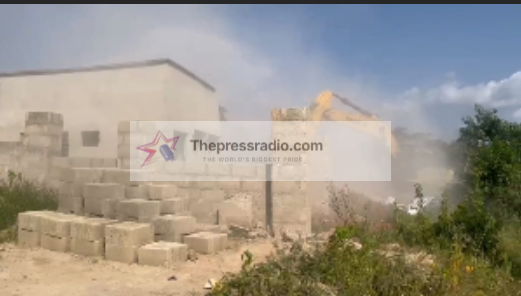
Dozens of private developers at Kona in the Ashanti Region have suffered substantial property losses after their uncompleted buildings were demolished for illegally encroaching on the restricted safety buffer zone of the Kofi Job Company stone quarry.
According to quarry management, the firm possesses a valid mining license to operate at the Kona site, a concession it has legally maintained for several decades after duly paying for both the mineral deposit and the surrounding protective perimeter. Under statutory mining regulations, the company is required to enforce a strict 500-meter buffer zone around its operations to shield surrounding communities and property from the hazards of high-impact rock blasting and heavy equipment activity.
Company officials explained that when the quarry first commenced operations, the designated buffer zone was completely devoid of human settlement or permanent buildings. Over time, however, private individuals began encroaching onto the restricted land, erecting permanent structures dangerously close to active blasting zones in violation of safety laws.
Despite multiple formal warnings and notices issued by the company urging the encroachers to vacate the area, the developers pressed ahead with construction. Left with no alternative to avert potential loss of life and maintain regulatory compliance, management moved in to pull down the uncompleted buildings situated within the demarcated safety perimeter.
When contacted regarding the demolitions, several affected developers acknowledged that they did not hold valid leases for the disputed plots. They explained that they had acquired the parcels through a local clan head in Kona who issued them basic indentures and promised to process formal lease and allocation documents at a later date. The developers further admitted that the Chief of Kona, who serves as the sole traditional custodian and authorizing figure over the stool lands, had never granted them permission to develop the area.
The incident highlights ongoing challenges surrounding unauthorized land sales and encroachment on industrial concessions in the region, prompting renewed calls for prospective developers to conduct thorough due diligence with traditional authorities and statutory planning agencies before committing resources to construction projects.
Source: Thepressradio.com