
Deputy Health Minister Cautions Training Institutions Against Graduating Unqualified Nurses

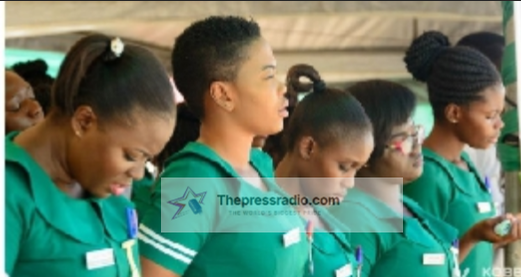
Deputy Minister of Health Dr. Grace Ayensu Danquah has cautioned health training institutions against permitting nursing students who fail their examinations or fail to meet established academic and clinical benchmarks to advance or graduate, warning that inadequate training directly endangers human lives.
Per reports published on Saturday, November 21, 2026, following her tour of health training schools at the Korle Bu Teaching Hospital captured in footage shared by Citi FM, Dr. Ayensu Danquah underscored that trainees must thoroughly master both theoretical knowledge and practical clinical competencies before receiving certification to practice, noting that lapses in training can prove fatal.
“If they take exams and they fail, and we pass them, one day we’ll be in that bed, and one of the nurses we trained will be asked to put an IV, and that person will come and put the catheter in your artery,” she warned.
She urged educators and institutional administrators to take seriously their obligation in producing competent healthcare professionals, pointing out that underqualified graduates could one day be responsible for treating their own family members as well as members of the wider public.
“Every nurse that we pass through who is not qualified, every nurse that we treat to get their exams done, is the nurse that is not you. They will take care of your child or they will take care of your parents,” she stated.
Beyond examination standards, Dr. Ayensu Danquah drew attention to Ghana’s evolving disease profile, calling on nursing institutions to prepare students to respond effectively to the growing prevalence of non-communicable diseases (NCDs). She explained that clinical care has expanded beyond primarily addressing infectious conditions such as cholera and malaria to managing complex, chronic illnesses that demand sustained medical attention.
According to her, patients battling chronic NCDs often do not return to their previous baseline state of health following hospital care and frequently require ongoing palliative and home-based health services.
“Now, the people that we are going to treat, they will even go home and they will need palliative care. They will even go home and they will need home health care, because it is not an infectious disease, and when they finish the process, they don’t go back to when they were healthier before,” she noted.
She encouraged training schools to maintain strict academic and practical standards so newly qualified nurses are equipped for both immediate and emerging healthcare challenges. During the visit, the Deputy Minister also commended the institutions for their neat environments and presentations, while recognizing their efforts in delivering emergency care instruction, including Advanced Trauma Life Support (ATLS) and Basic Life Support (BLS).
Source: Thepressradio.com