

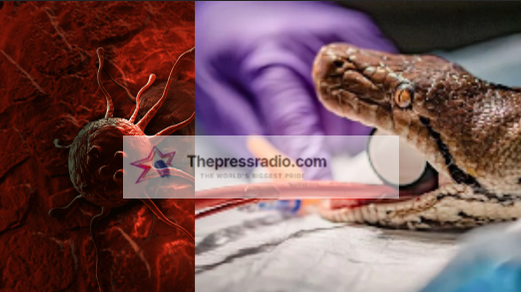
A reticulated python at Chester Zoo in the United Kingdom has made a remarkable recovery after undergoing a cancer treatment normally used in human medicine.
The 4-metre-long, 15-foot python, named Jodie Foster, is believed to be the first snake in the world to receive electrochemotherapy, according to the veterinary team involved in the procedure.
The treatment became necessary after vets discovered a malignant tumour in the snake’s jawbone. Zoo keepers initially became concerned when Jodie Foster began eating less than usual and appeared less active.
Medical examinations later confirmed that the python had fibrosarcoma, a malignant tumour affecting the jaw.
Veterinarians initially removed the tumour, but the cancer subsequently returned. As the tumour began damaging part of the snake’s jawbone, the veterinary team determined that surgery alone was unlikely to provide a sufficient solution.
Chester Zoo therefore worked with specialists from the University of Liverpool to adapt electrochemotherapy, a treatment commonly used in human cancer care, for use on the large reptile.
The procedure involved removing the tumour together with part of the affected jawbone. Electrochemotherapy was then administered to target cancer cells that could have remained following the surgery.
The unusual size of the patient also presented logistical challenges for the veterinary team. Because there was no operating table large enough to accommodate the 15-foot python, two operating tables were joined together to create a suitable surface for the procedure.
Veterinarians also had to carefully maintain the snake’s body temperature throughout the operation. Heated blankets and warmed air were used during the procedure to help keep Jodie Foster stable.
The operation lasted approximately 90 minutes, after which the python reportedly recovered remarkably quickly.
The successful treatment represents a notable development in veterinary medicine because electrochemotherapy has traditionally been associated with cancer treatment in humans and some other animals.
For the Chester Zoo team, adapting the treatment for a snake required collaboration with cancer specialists and careful consideration of the reptile’s physiology and size.
The case also demonstrates how techniques developed for human medicine can potentially be adapted to help treat diseases in animals.
Jodie Foster’s recovery has provided encouragement to the veterinary team, particularly because the tumour had previously returned after being removed.
The case is expected to provide useful information for other veterinary professionals who may encounter similar cancer cases in reptiles. The team plans to formally publish details of the procedure so that specialists can learn from the experience.
The successful treatment has therefore attracted attention not only because of the unusual patient involved but also because of its potential significance for veterinary cancer care.
Jodie Foster’s case highlights the increasing range of medical options available to veterinarians and the lengths to which specialist teams can go to provide treatment for animals with serious illnesses.
Source: Thepressradio.com