
Parrot eggs hatch after suspected Thai national is arrested at South African airport

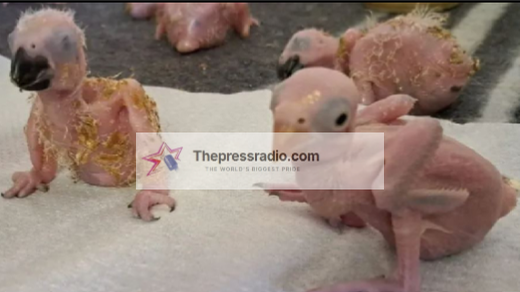
Several parrot eggs reportedly hatched after South African authorities intercepted a suspected wildlife trafficking attempt involving a Thai national at OR Tambo International Airport in Johannesburg.
The 50-year-old Thai national was arrested on August 20 after allegedly attempting to leave South Africa with 50 bird eggs concealed in a homemade incubator disguised as hand luggage. Preliminary investigations indicated that the eggs were believed to have originated from parrot species protected under the Convention on International Trade in Endangered Species of Wild Fauna and Flora (CITES).
The arrest followed an intelligence-driven operation involving several law-enforcement and environmental agencies, including the Environmental Management Inspectorate, commonly known as the Green Scorpions, as well as police intelligence, border police and the SAPS Stock Theft and Endangered Species Unit.
Authorities said the makeshift incubation device was designed to keep the eggs alive during transportation. However, officials have raised concerns about the risks that such transportation methods pose to developing embryos and wildlife.
Following the seizure, the eggs were placed under specialist care at the National Zoological Garden in Pretoria, with the South African National Biodiversity Institute (SANBI) involved in their rehabilitation.
A number of the rescued eggs have since successfully hatched. The newly emerged chicks are reportedly receiving intensive veterinary and husbandry care as specialists work to maximise their chances of survival.
The development has brought renewed attention to the growing threat posed by illegal wildlife trafficking, particularly the smuggling of protected bird species and their eggs.
The latest arrest was reportedly not an isolated incident. On July 16, a 23-year-old Thai national was arrested at the same airport after allegedly attempting to smuggle 418 parrot eggs concealed inside two homemade incubator bags.
Although authorities have not confirmed whether the two incidents are connected, the similarities between the cases have raised concerns about possible organised international trafficking networks targeting protected bird species.
Officials have warned that the illegal collection and transportation of parrot eggs can have serious consequences for wild bird populations. Removing eggs from nests can interfere with natural breeding and potentially threaten already vulnerable species.
The Department of Forestry, Fisheries and the Environment has stressed that illegal wildlife trafficking also raises significant animal-welfare concerns, as eggs transported in improvised incubation systems may be exposed to conditions that reduce their chances of survival.
South African authorities have intensified efforts to combat wildlife trafficking through cooperation between environmental agencies, police, border-control units and other enforcement bodies.
The illegal export of CITES-listed wildlife is subject to strict regulation in South Africa. Individuals convicted of relevant wildlife offences can face severe penalties, including fines of up to R10 million, imprisonment of up to 10 years, or both.
As investigations continue, authorities are expected to establish where the eggs originated, their intended destination and whether the arrested individual was allegedly acting alone or as part of a wider trafficking network.
For now, conservation specialists are focused on the survival of the rescued chicks, with the successful hatching of several eggs providing a positive development following the interception.
Source: Thepressradio.com