
South Africa’s upcoming municipal elections are expected to determine far more than the political control of local councils. Analysts say the vote could play a major role in deciding whether the country’s cities become centres of growth and opportunity or continue to face rising inequality, unemployment, and governance failures.
The year-end elections come at a critical time for South Africa, where more than 71% of the population now lives in urban areas. Metropolitan municipalities are estimated to account for about 55% of national GDP and more than half of all jobs.
Experts argue that the performance of cities such as Johannesburg, Cape Town, and Durban will strongly influence the country’s wider economic future.
Urban specialists speaking at a public seminar hosted by the Institute for Security Studies said the key challenge is not urbanisation itself, but poor management of growing urban demand and weak municipal capacity.
South Africa continues to face serious housing shortages, with an estimated 2.2 million households living in informal settlements. Basic infrastructure systems such as water, roads, and electricity are also under increasing pressure.
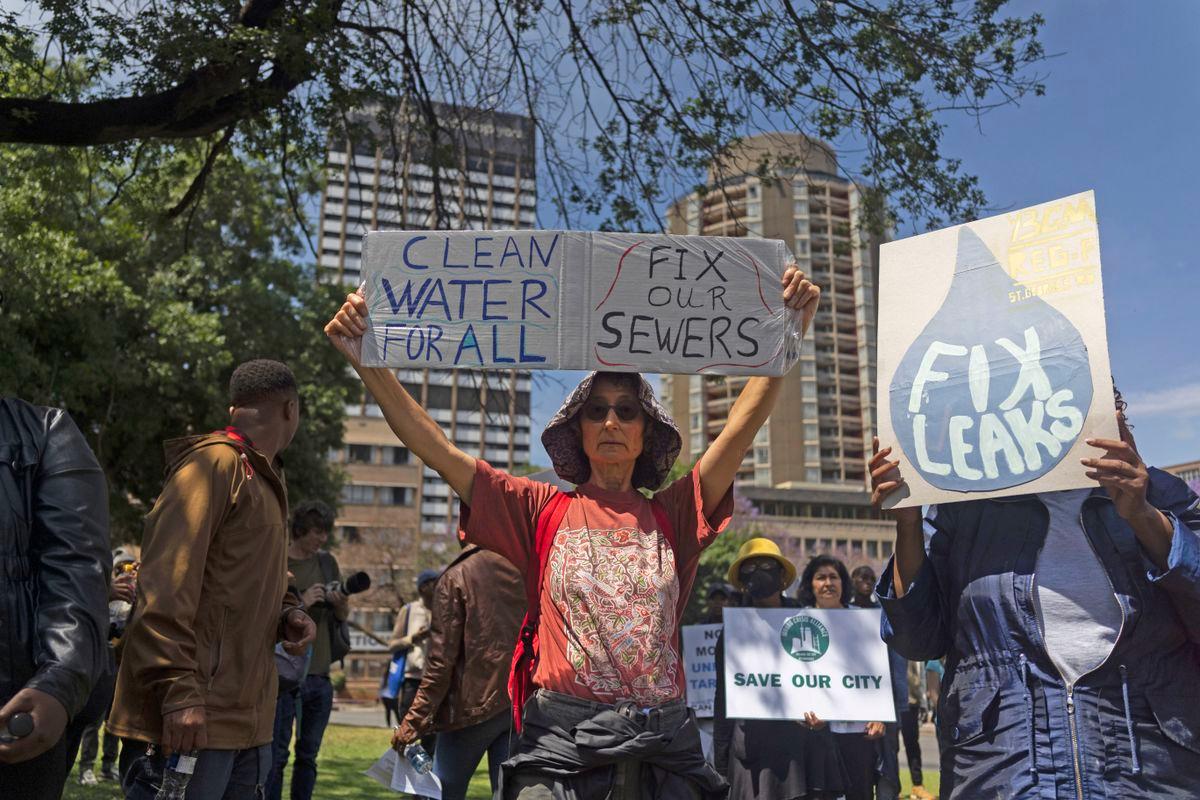
A 2023 government assessment found that 73% of Water Services Authorities were rated critical or poor, while municipal water losses through leaks, theft, and inefficiencies have risen sharply.
Cities like Johannesburg have repeatedly experienced water outages and service failures, highlighting deeper governance problems.
Analysts identified three major constraints facing urban areas: weak institutions, slow economic growth with limited job creation, and deep spatial inequality inherited from apartheid-era planning.
Many residents still spend hours commuting long distances to work, while transport costs consume large portions of household income.
The instability of local government has also raised concern. Johannesburg alone has had nine mayors in eight years, making long-term planning difficult.
Experts warn that failing municipalities weaken trust in democracy, as citizens judge government most directly through everyday services such as clean water, electricity, roads, housing, and waste management.
Despite these challenges, researchers say South Africa still has strong assets, including a developed financial sector, private enterprise, skilled professionals, and planning expertise that could help revitalise cities if governance improves.
Economic modelling suggests that with stronger governance, infrastructure reform, and growth-focused policies, the country’s GDP by 2043 could be 53% higher than current projections.
Observers say the municipal elections may therefore become one of the most important votes for South Africans’ daily quality of life and the future direction of the country.
Source: Thepressradio.com