
The pattern is no longer being viewed as accidental or isolated. Analysts say it is increasingly deliberate, evolving, and deeply concerning as Nigeria’s insurgency war takes a more dangerous turn.
Across the North-East theatre of Nigeria, particularly in states such as Borno, Yobe, and Adamawa, insurgent groups like Boko Haram and ISWAP have shifted strategy. Rather than focusing only on troops, they are increasingly targeting senior military commanders who lead frontline operations.
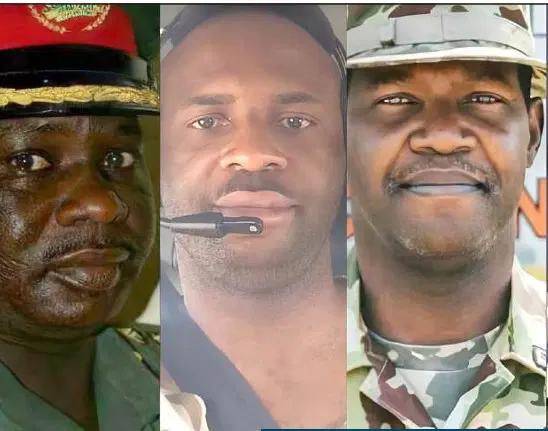
Over the past five years, several senior officers including brigadier generals and colonels have been killed in combat situations while actively directing operations.
One of the most recent incidents involved the killing of Brigadier General Braimah during an attack in Benisheikh, a strategic town in Borno State. The assault, linked to Islamic State West Africa Province (ISWAP), was described as a coordinated night operation involving heavy weapons.
Reports indicate that insurgents are no longer only engaging soldiers randomly but are identifying and striking command structures to disrupt military coordination and weaken battlefield leadership.
Security analysts say this strategy allows insurgents to create confusion, slow down response times, and reduce operational effectiveness by removing experienced commanders from the field.
Among the officers killed over the years is Brigadier General Dzarma Zirkusu, who was ambushed in 2021 while on an operational visit in southern Borno State. His convoy was attacked in a carefully planned operation believed to involve Boko Haram fighters.
That same year, Colonel Dahiru Bako was killed when his reinforcement convoy was hit by an improvised explosive device followed by a coordinated ambush along the Damboa Maiduguri highway.
In 2022, Brigadier General Olayinka Adesope was killed during a night attack on a military base in the Bama axis after insurgents breached defensive positions using heavy firepower.
Mid-level commanders have also been affected. In 2023, Colonel Ibrahim Sakaba was killed during combat operations in northern Borno, while in 2024, Colonel Aliyu Musa died when his convoy was struck by an explosive device along the Dikwa-Ngala route.
By 2025, Brigadier General Uba was also killed during an ambush near the Sambisa Forest region while leading a clearance operation against insurgents.
Military analysts say these repeated losses show a clear pattern of insurgents adapting their tactics, combining intelligence gathering with coordinated ambushes and direct assaults on military formations.
Experts also note that Nigerian commanders often lead from the front, a tradition that strengthens troop morale but places senior officers within direct reach of insurgent attacks.
The use of improvised explosive devices, ambush tactics, and base assaults has become more sophisticated, often aimed at disrupting leadership and capturing equipment.
Each loss of a senior officer creates operational setbacks, forcing rapid restructuring of command and slowing down ongoing missions in difficult terrain.
The situation has also raised concerns about intelligence gaps, force protection, and the ability of the military to anticipate insurgent movements in highly volatile regions.
Analysts warn that unless these evolving tactics are addressed through stronger intelligence and improved battlefield protection, the risk of further high-level casualties remains significant.
Source: Thepressradio.com