

Israel and United States Launch Joint Military Attack on Iran
Tensions in the Middle East escalated sharply after Israel and the United States launched a coordinated military attack on Iran, marking one of the most serious confrontations in the region in recent years. The joint operation reportedly involved airstrikes and missile attacks on key strategic locat
Ogyem Solomon
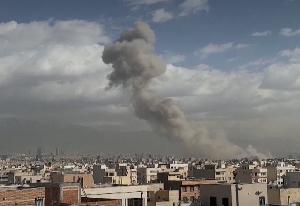
Tensions in the Middle East escalated sharply after Israel and the United States launched a coordinated military attack on Iran, marking one of the most serious confrontations in the region in recent years. The joint operation reportedly involved airstrikes and missile attacks on key strategic locations, triggering explosions in major Iranian cities, including Tehran.
According to international reports, the operation was carried out as a combined effort between Israeli and U.S. forces, targeting military infrastructure, security installations, and other strategic assets linked to Iran’s defence and regional operations. The attack is believed to have been the result of rising geopolitical tensions, long-standing hostilities, and unresolved diplomatic disputes surrounding Iran’s military and nuclear capabilities.
Officials from Israel described the strikes as a pre-emptive security operation, aimed at neutralising threats they consider dangerous to regional and national stability. The United States, which supported and participated in the operation, framed its involvement as part of broader security cooperation with Israel, citing shared strategic interests in the region.
Explosions were reportedly heard across multiple locations in Iran, with smoke rising from targeted areas as emergency services responded to the impact of the strikes. While official casualty figures were not immediately confirmed, reports indicated damage to infrastructure and heightened military activity across the country. Iranian air defence systems were activated as authorities moved to secure sensitive locations and protect key installations.
In response, Iran condemned the attacks, describing them as a violation of sovereignty and an act of aggression. Iranian officials accused Israel and the United States of deliberately escalating tensions and warned of serious consequences. Military units were reportedly placed on high alert, and defensive measures were intensified across the country as fears of further strikes grew.
The attack has sparked widespread international concern, with observers warning that the confrontation could destabilise the Middle East and trigger broader regional conflict. Analysts say the situation risks drawing in neighbouring countries and allied groups, potentially transforming the crisis into a multi-front conflict with global implications.
Diplomatic channels were reportedly activated immediately after the strikes, as world leaders and international organisations called for restraint and de-escalation. Several governments urged all parties to return to dialogue and avoid actions that could worsen the humanitarian and security situation in the region.
Security experts note that the conflict reflects deeper geopolitical struggles involving power, influence, and control in the Middle East. Long-standing disputes over Iran’s regional role, military alliances, and strategic positioning continue to fuel instability, making diplomatic resolution increasingly complex.
For civilians across the region, the escalation has created fear and uncertainty, as communities brace for possible retaliation and further military action. Airports, borders, and key facilities were placed under heightened security, while emergency services prepared for potential emergencies.
As the situation continues to develop, the world watches closely for Iran’s response and the next steps from Israel and the United States. With tensions at a critical level, international attention remains focused on whether diplomacy can prevent the conflict from expanding into a wider war.
Source: Thepressradio.com
More Related Articles
US Military Conducts Airstrikes Against al‑Shabaab in Somalia Following Anti-ISIS Operation in Nigeria
The United States military has carried out airstrikes targeting al‑Shabaab positions in Somalia, following a recent operation against ISIS affiliates in Nigeria after the Christmas period. U.S. Africa Command (AFRICOM) confirmed that the strikes aimed to weaken the extremist group’s capabilities and

Why Cardi B and Stefon Diggs Have Reportedly Ended Their Relationship
American rapper Cardi B and NFL star Stefon Diggs have reportedly gone their separate ways, bringing an end to their much-talked-about romance. According to reports, the split stems from ongoing personal differences and challenges that made it difficult for the pair to maintain a stable relationship
What the U.S.–Venezuela Oil Reset Means for Caribbean Energy Markets
The United States’ completion of its first sale of Venezuelan crude oil in years—valued at approximately $500 million—signals a notable shift in hemispheric energy relations, reopening a channel that had long been constrained by sanctions and political standoff. The transaction represents more than