
Inside the Presidential Garage: Iconic Cars That Defined Kwame Nkrumah’s Era
The presidency of Kwame Nkrumah was not only marked by political transformation and Pan-African leadership but also by symbols of prestige and authority—one of which was his remarkable collection of state vehicles. The presidential garage during his era reflected both power and Ghana’s emergence ont
Ogyem Solomon
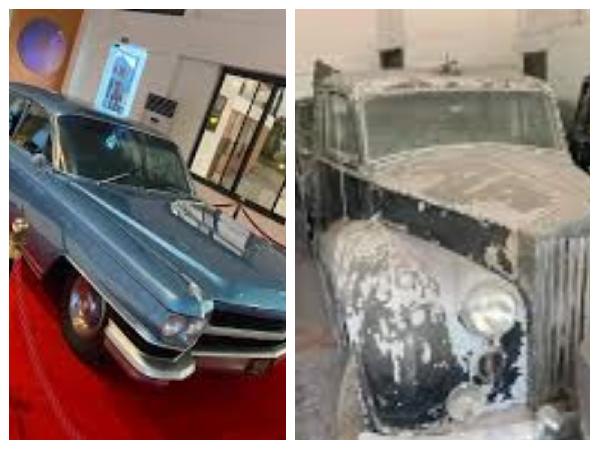
The presidency of Kwame Nkrumah was not only marked by political transformation and Pan-African leadership but also by symbols of prestige and authority—one of which was his remarkable collection of state vehicles. The presidential garage during his era reflected both power and Ghana’s emergence onto the global stage after independence.
Among the most notable vehicles in Nkrumah’s fleet was the Cadillac Fleetwood, a luxury car widely recognized for its elegance and commanding presence. The vehicle was often used for official duties, including ceremonial parades and state functions. Its design and comfort made it a fitting choice for a head of state representing a newly independent nation.
Another standout in the presidential garage was the Rolls-Royce Silver Cloud, a vehicle synonymous with royalty and high status around the world. Its inclusion in the fleet symbolized not just luxury but also Ghana’s growing diplomatic stature. The Rolls-Royce was frequently used during high-level engagements and official ceremonies, reinforcing the image of Ghana as a proud and sovereign nation.
The fleet also featured the Mercedes-Benz 600, one of the most advanced vehicles of its time. Known for its engineering excellence and superior performance, the car was a favorite among global leaders. Its presence in Nkrumah’s collection demonstrated a desire to align Ghana with modernity and international standards of leadership.
These vehicles were more than just transportation—they were powerful symbols of a new national identity. Following Ghana’s independence in 1957, Nkrumah sought to position the country as a leader in Africa and a respected player on the world stage. The presidential fleet became part of that broader image, projecting confidence, progress, and authority.
Beyond their luxury, some of these cars were reportedly adapted to meet security needs, reflecting the political climate of the time. As a prominent figure in African liberation movements, Nkrumah faced various threats, making safety a key consideration in his official movements.
The legacy of these vehicles continues to resonate today, with some preserved as part of Ghana’s historical heritage. They serve as reminders of a defining era when the country was forging its identity and asserting its independence in both symbolic and practical ways.
Nkrumah’s presidential garage ultimately tells a deeper story—one of ambition, pride, and a vision for a nation determined to stand tall among the world’s powers. Through these iconic cars, the era captured not just the lifestyle of a leader, but the aspirations of an entire country at a pivotal moment in its history.
Source: Thepressradio.com
More Related Articles
President Mahama Pays Courtesy Visit to Ga Mantse at UGMC After Accident
Former President John Dramani Mahama has paid a courtesy visit to the Ga Mantse, King Tackie Teiko Tsuru II, at the University of Ghana Medical Centre (UGMC), following an accident involving the traditional leader. The visit was a show of solidarity, respect, and concern, reflecting the deep ties be
One Year After Assault, Journalist at Council of State Election Still Awaits Justice
It has been one year since a journalist covering the Council of State election in the Ashanti Region was allegedly assaulted, but the journalist says justice has not yet been served. The incident, which occurred while the reporter was performing their duties, continues to raise concerns about the sa
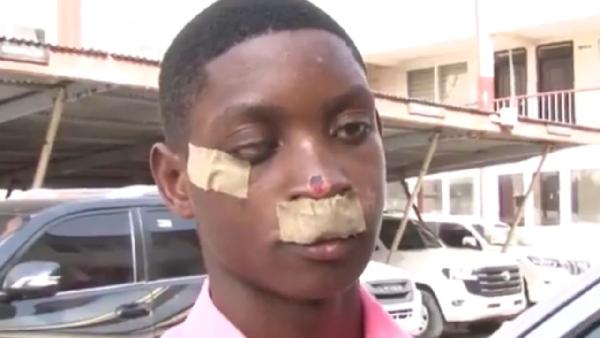
VIDEO: Obrachire SHS Student Speaks Out After Brutal Assault During Inter‑School Sports
A student of Obrachire Senior High Technical School (SHTS) has recounted his terrifying ordeal after being violently attacked during a district inter‑school athletics competition in Agona Swedru, Central Region. The incident occurred on 19 February 2026, when a sporting event meant to showcase youth