

“City Boys vs Village Boys”: Dr. Nkem’s Message and the Rising Power of the Nigerian People
As Nigeria moves steadily toward the 2027 general elections, the political landscape is shifting in ways that many did not anticipate. Across the country, nearly 30 governors have reportedly defected to the ruling All Progressives Congress (APC), with open support from billionaires and wealthy power
Ogyem Solomon

As Nigeria moves steadily toward the 2027 general elections, the political landscape is shifting in ways that many did not anticipate. Across the country, nearly 30 governors have reportedly defected to the ruling All Progressives Congress (APC), with open support from billionaires and wealthy power brokers. Even figures from the South East, traditionally seen as politically distinct, are aligning with this growing bloc of elite political influence.
Yet, despite this consolidation of power, money, and political control, there is one thing that still causes fear among the political class: the signing and full implementation of electronic transmission of election results.
This fear tells a bigger story.
It exposes a simple truth that has always existed but is now becoming clearer to everyday citizens — real power does not belong to the rich, the elite, or the politically connected. It belongs to the people.
If power truly belonged to wealth and influence alone, there would be no anxiety around transparent systems, digital accountability, and electoral reforms. But the resistance to electronic transmission of results reveals the fragility of elite control when faced with transparent, people-driven democratic systems. It shows that when the process is clean, fair, and open, money loses its power and manipulation loses its grip.
This moment marks a shift in political identity and narrative. No longer is the struggle simply “the elites versus the people.” A new reality is emerging — one that better reflects the social and political divide shaping modern Nigeria.
The slogan of the 2027 elections will not be “elite versus the people.”It will be:
“City boys versus village boys.”
This is not about geography. It is about mentality, access, privilege, and control.
The “city boys” represent political elites, billionaires, power brokers, and establishment figures who operate within protected systems of influence. The “village boys” represent everyday Nigerians — traders, farmers, students, workers, artisans, small business owners, and grassroots communities whose voices are often ignored but whose numbers define democracy.
This shift matters because democracy is not built on influence — it is built on participation.
For too long, many Nigerians have believed that their votes do not count. Political apathy has grown out of frustration, broken trust, and repeated disappointments. But this mindset must change. Our votes matter. Our voices matter. Our participation matters.
People must be encouraged — seriously and deliberately — to register to vote. Civic education, community mobilization, and political awareness must become priorities. Democracy does not function on social media commentary alone; it functions at polling stations, voter registration centers, and through organized citizen participation.
The future of leadership in Nigeria will not be determined by defections, endorsements, or financial alliances alone. It will be determined by turnout, transparency, and public engagement.
What we are witnessing now is a quiet but powerful transformation. The “village boys” — the ordinary people — are becoming more politically conscious. Communities are paying attention. Citizens are questioning systems. The public is beginning to understand that democracy is not something given by politicians; it is something claimed by the people.
This is why the current moment feels “messy” for the ruling party and the political elite. The traditional playbook of money, influence, and elite alignment is no longer enough. The people are watching. The people are learning. The people are organizing.
And when the people organize, power shifts.
The message is simple but profound:Power does not belong to governors.Power does not belong to billionaires.Power does not belong to political parties.Power belongs to the people.
The future of Nigeria’s democracy will not be written in boardrooms — it will be written in communities, polling stations, and the collective will of ordinary citizens who finally realize that their votes truly count.
Source: Thepressradio.com
More Related Articles

Outrage as Video Shows Patients Sleeping on Floors at Korle-Bu Teaching Hospital
A disturbing video circulating online has sparked public outrage after showing patients lying on the floor inside a ward at Korle-Bu Teaching Hospital, raising fresh concerns about overcrowding and bed shortages in Ghana’s healthcare system. The viral footage captures a troubling scene where several

WATCH: Young Man Explains Why Family Directive Led to Burial Using an Unclaimed Body
A young man has shared a shocking account of how a family directive led to the decision to bury an unclaimed body in place of a relative, revealing details that have stirred strong reactions online. In a personal recount, the man explained that the decision was guided by instructions from his family
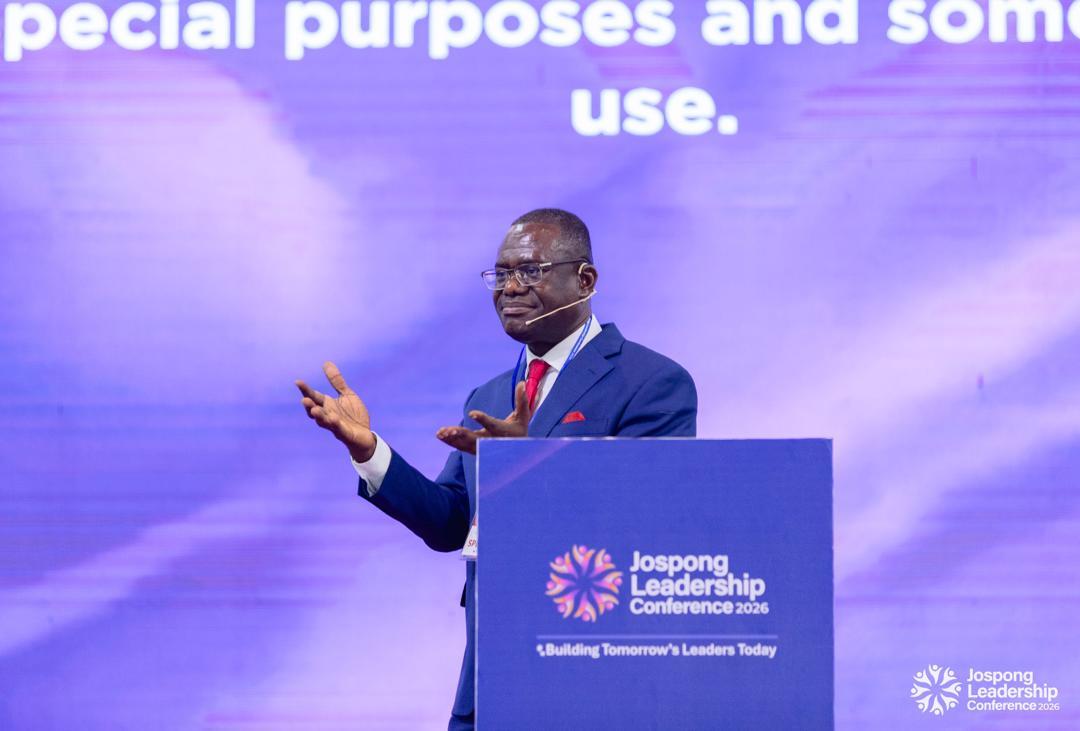
Dr. Siaw Agyepong Urges Deliberate Leadership Cultivation at 2026 JLC Conference
The Executive Chairman of the Jospong Group, Dr. Joseph Siaw Agyepong, has urged leaders to make the conscious development of future strategic minds and innovators a priority. Addressing attendees on the opening day of the 13th Jospong Leadership Conference (JLC) on Monday, January 12, 2026, Dr. Sia