Sympathizer Safeguarded Severed Head of Kwame Nkrumah’s Statue for Decades After 1966 Coup

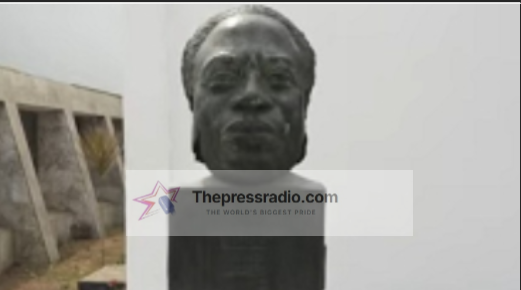
A woman sympathetic to Ghana’s founding president, Dr. Kwame Nkrumah, reportedly kept the severed head of his iconic statue in her possession for more than four decades after the monument was torn down during the February 24, 1966 coup that overthrew his government.
Per reports published on Sunday, November 22, 2026, a tour guide at the Kwame Nkrumah Memorial Park and Mausoleum in Accra recounted the history while guiding visitors through the museum, explaining the origins of the headless statue displayed on the grounds. According to the guide, the woman picked up the detached head on the very day of the coup and safeguarded it privately for years before eventually handing it over to state authorities.
The statue originally stood intact in front of Ghana’s former Parliament House, a building that now serves as the High Court. Following the 1966 military takeover, the monument was pulled down and beheaded as part of a wider wave of destruction targeting symbols and landmarks associated with the ousted president. Describing how the sculpture was brought down, the guide noted, “They broke it down using hammer and chisel, pulled it to the ground, took a photo of it and sent it to him.”
Years later, when the memorial park was constructed, authorities had access only to the headless body of the statue and erected it in that incomplete condition. The guide explained that the woman later delivered the head to the Information Services Department, which subsequently handed it over to the museum for preservation. Notably, the account carried a minor timeline inconsistency: while the guide mentioned 2007 as the year the artifact was returned, he also indicated that it had been kept for 43 years after 1966—a duration that places the return in 2009.
To preserve the historical authenticity of the events surrounding the coup, museum officials deliberately chose not to reattach the recovered head to the body, instead displaying the two pieces separately so visitors can better appreciate the story behind the monument. The guided tour also showcased the facility’s audiovisual gallery, which features archival recordings, photographs, and historical artifacts documenting Nkrumah’s life, leadership, and enduring contributions to Ghana and the African continent, with the guide encouraging more tourists and citizens to visit the site.
Source: Thepressradio.com