

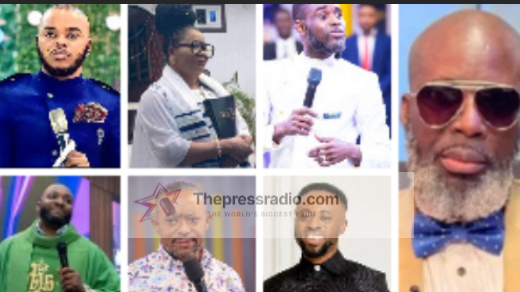
Across Ghana’s television screens and social media timelines, short clips of preachers trending for personal rivalries, explicit bedroom commentary, and theatrical displays have increasingly rivaled mainstream entertainment stories for public attention.
Per reports published on Sunday, November 22, 2026, figures such as Bishop Daniel Obinim, Prophet Kumchacha, Nana Agradaa, Prophet Ogyaba, Fire Oja, and Prophet Uche routinely generate headlines alongside top musicians and Kumawood actors. While charismatic churches in Ghana traditionally built congregations through open-air crusades, radio broadcasts, and miracle testimonies, today’s digital landscape rewards algorithmic reach, controversy, and shock value raising questions over where pastoral leadership ends and influencer-style content creation begins.
Public feuds have emerged as a major driver of online engagement. Nana Agradaa previously clashed publicly with Prophet Owusu Bempah in a dispute that led to his arrest, and has more recently traded barbs with TikTok personality Abena Payola. Prophet Kumchacha, known privately as Nicholas Osei, has become a regular voice on entertainment radio and television panels, engaging in heated yet often comedic exchanges with celebrities, politicians, and fellow clerics. Fire Oja has similarly expanded his digital footprint through confrontational live broadcasts aimed at rival prophets and critics, including a dispute with musician Mzbel over remarks concerning her health, while Bishop Obinim and Prophet Ogyaba have clashed publicly over matters linked to social media influencer Ohemaa Dynamite.
Candid and explicit discussions about intimacy have also become commonplace among several of these personalities. Prophet Ogyaba has repeatedly sparked online debate with graphic remarks targeting rivals’ private lives most notably Bishop Obinim while Prophet Kumchacha has openly discussed explicit marital practices, and Agradaa has spoken publicly about her sexual relationship with her husband, even sharing post-coital videos online.
Persona reinvention and dramatic spectacles further anchor their public appeal. Agradaa, born Patricia Asiedua, transitioned from a televised traditional priestess associated with “Sika Gari” money-doubling claims into an ordained evangelist, though she was subsequently arrested over allegations of running another money-doubling scheme within her church. Bishop Obinim has become synonymous with viral church theatrics, from claiming to transform into animals in the spiritual realm to attempting to “fly” during a sermon and declaring himself an angel, even as bitter disputes with his estranged wife have spilled into his broadcasts. Alongside them, prophets including Boahen Uche, Nigel Gaisie, and Bishop Owusu Bempah regularly spark nationwide debate through dramatic prophecies and bold declarations.
Observers and critics maintain that such antics operate as calculated publicity tools in an outrage-driven attention economy, where a viral Sunday clip quickly spreads across blogs and radio panels by Monday, drawing curious crowds, offerings, and consultation fees. Defenders, however, insist that blunt, unfiltered communication on social media simply meets ordinary and younger Ghanaians where they are rather than relying on stiff ecclesiastical traditions. Amid the debate, umbrella bodies including the Christian Council of Ghana and the Ghana Pentecostal and Charismatic Council (GPCC) have repeatedly cautioned against the commercialization and trivialization of Christianity, warning that scandals and online spectacles risk steadily eroding public confidence in the clergy.
Source: Thepressradio.com