
Oil exploitation in the Republic of Congo has come under renewed scrutiny following a report that links petroleum activities to environmental degradation, declining crop yields and concerns over the health of farming communities.
The report, produced by the Catholic Diocese of Pointe-Noire in collaboration with Caritas, focuses on communities in the Kouilou department, where residents and farmers have reportedly raised concerns about the impact of oil-related activities on their livelihoods.
According to the report, farmers in the area have experienced significant declines in their cassava harvests, creating concerns about food production and household incomes.
Residents have also reportedly observed problems affecting fruit trees, including unusual diseases, premature fruit loss and the drying of some trees. The findings have prompted questions about the possible relationship between these agricultural problems and pollution associated with oil production.
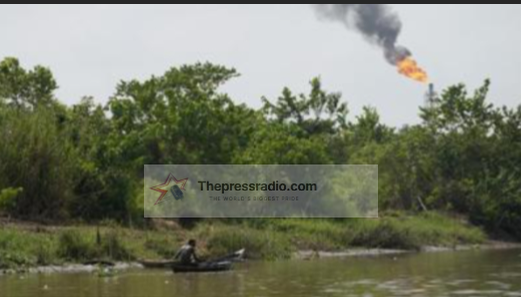
The report attributes some of the environmental concerns to gas flaring by oil companies operating in the region. Gas flaring is the burning of natural gas released during oil production and has long been associated with air pollution and other environmental concerns.
The Catholic Diocese and Caritas report further claims that soil, water and air in parts of the affected area have recorded levels of contamination exceeding World Health Organization limits.
Several companies operating in Congo’s oil sector, including Total, ENI, the national oil company SNPC and Wing Wah, are identified in the report in connection with the environmental concerns. The allegations contained in the report have not, however, been established as findings of a court.
Gas flaring has been banned in the Republic of Congo since 2007, although exceptions were reportedly granted by the authorities in 2022.
The continued concerns have raised questions about how effectively environmental regulations are being enforced and whether communities living close to oil-producing areas are receiving adequate protection from the possible effects of industrial activities.
For farmers whose livelihoods depend heavily on agriculture, declining harvests and damaged crops can have serious economic consequences. Reduced agricultural productivity can affect household food supplies while also limiting income for families that depend on farming.
The report also comes amid wider calls for greater accountability from companies involved in extractive industries across Africa. Environmental campaigners and civil society organisations have repeatedly urged governments and companies to ensure that natural-resource development does not come at the expense of local communities.
Amnesty International has previously criticised authorities in the Republic of Congo over what it described as insufficient efforts to ensure that industrial companies protect environmental and human rights in communities affected by their operations.
The latest report is therefore likely to add to discussions about environmental monitoring, corporate responsibility and the protection of communities in oil-producing regions.
Further investigations and independent environmental assessments could help establish the extent of pollution in the affected areas and determine the specific causes of the reported agricultural losses.
Source: Thepressradio.com